
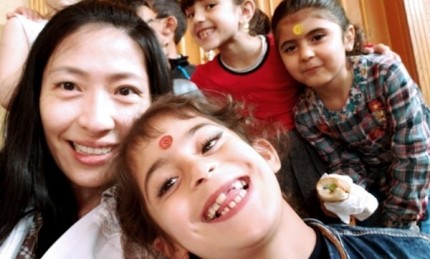
Guest blog by Pam W., Two-Time Lebanon LIFE Team Participant
Geopolitical crises and wars have become typical news items. Following the coverage of the war in Syria, the images of casualties rattled me, but they were just news. In 2017, I joined GAiN on its first LIFE team mission to Lebanon to serve alongside a local partner working with refugees in Beirut. While there, I visited the Bekaa Valley, an area of farmland near the Syrian border that is now filled with a multitude of makeshift tents. The valley has become “home” to Syrians who fled their war-torn country.
We hear a lot about the war and refugees from Syria, but not so much about the Syrians displaced within their own country – and there are many. Some had to flee their bomb-stricken homes, along with any surviving family members, with only the clothes on their back. While in Lebanon, I met Syrian aid workers from GAiN’s local partner who provide both physical (food distribution) and emotional support to these Internally Displaced People (IDP). They shared accounts of the experiences of IDPs, and also some of their own. One aid worker shared her own chilling account of escaping armed groups. These experiences are unlike those reported in the media. They are painfully detailed and personal.
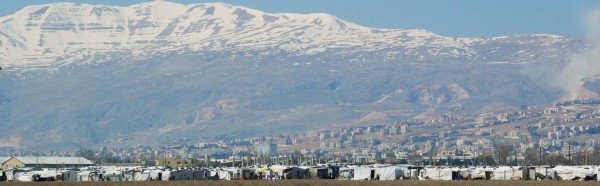
After returning home, news from Syria was no longer just news to me. Now I had friends living there – and that changed everything. With the war into its seventh year, local Syrians were surviving with limited resources and diminishing hope, and they are feeling forgotten.
I needed to do something….
I felt it was important that I share their stories so the world could relate to them on a personal level. I also launched a GAiN campaign and fundraised for 100 Bags of Blessing. Each bag provides food for a family of five for a month. These bags are vital to IDPs in Syria who struggle on a daily basis for even the most basic of necessities. The campaign enables sponsors to support the IDPs in Syria in a direct way, but it also helps to restore their hope and reminds them that they have not been forgotten and are loved.
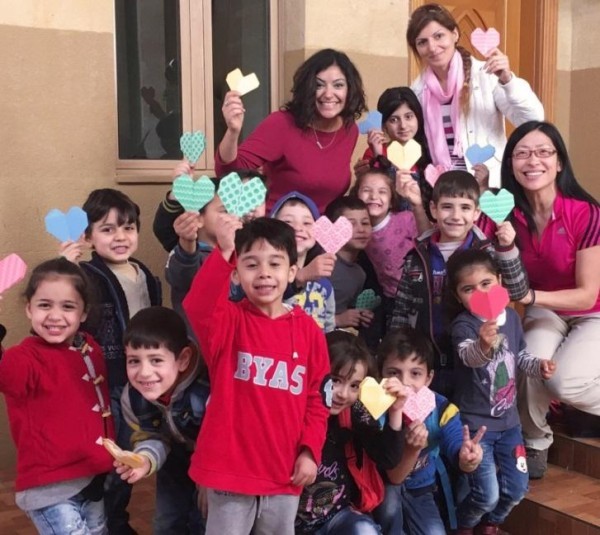
Returning to Lebanon in 2018, there was a sense of familiarity. Reconnecting with the staff of GAiN’s local partner and the refugee children was like visiting relatives; no introduction was necessary. For me, the highlight was spending time with the aid workers from Syria. I feel my GAiN campaign brought me closer to them. There were a few familiar faces from my first visit, but I felt a sense of closeness with all of them. They were like family. I am humbled by the tenacity of these aid workers, the silent heroes that the world will never know.
Hearing stories about those who received the Bags of Blessing was like a sequel to my fundraising campaign, following the journey of these bags into the hands of specific recipients. Without this food distribution, these people wouldn’t have had enough to eat.
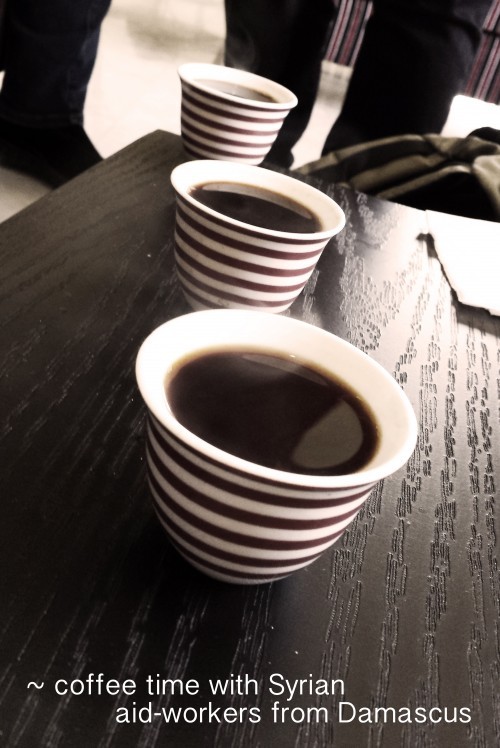
Returning home this time, I am not just telling stories. I am sharing about the lives of people who now have a special place in my life. Continued support of IDPs in Syria through programs such as the Bags of Blessing program is still very much needed. Most importantly, I hope to cultivate a connection between them and the rest of the world by sharing their personal testimonies gathered during my LIFE team experiences.
Like the song says: “We are the world…We’re all part of God’s great big family…we’ll make a brighter day…Just you and me.”
Whether it is getting to know the refugees in our neighbourhood or joining GAiN’s LIFE team in Lebanon and meeting them locally, the encounter is life-changing. They will no longer be just news stories but personal acquaintances, and for me, like family!
DO YOU WANT TO GO ON A LIFE TEAM TRIP? SEE OUR UPCOMING TRIPS HERE.
LEARN MORE ABOUT THE BAGS OF BLESSING PROGRAM HERE.
In the past seven years since the Syrian Crisis started, news of the ongoing war has been unavoidable. Uncertainty seems to be the only constant for refugees and yet, there is still a strong spirit of hope – participants on our most recent LIFE Team to Lebanon learned.
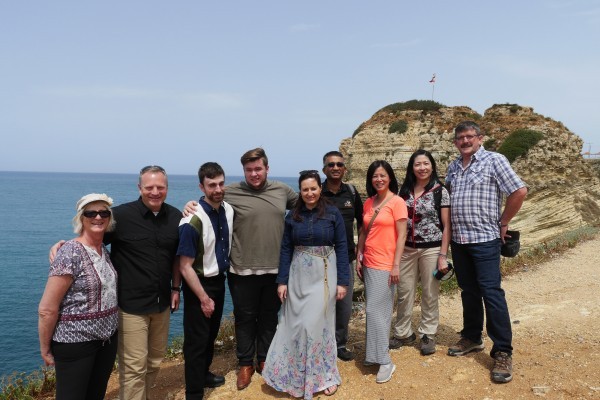
For two weeks in May, seven compassionate people joined Global Aid Network on a LIFE Team impact trip to Lebanon. The purpose of the trip was to get a better understanding of the crisis happening in Syria while serving alongside our partner in Beirut, Lebanon, to help bring hope and encouragement to refugees.
The team showed up, ready to serve with the opportunity to be present in the following ways:
1) To encourage our Syrian partners
Our team met with some leaders from our partner organization in Syria, who travelled from Damascus to Beirut for a short one-and-a-half day retreat. We had the chance to hear directly from our Syrian partner’s staff who shared their own harrowing stories of war, displacement and loss.
The volunteers, who faithfully distribute Bags of Blessing (food and household items) to people who have been forced from their homes, were an inspiration and encouragement to our team. Their steadfast determination to stay in a war zone to provide aid to those in need is a strong testament to their faith.
“At times, the personal stories were so heartbreaking that many tears flow[ed] in the room,” shared Lily Kwok, LIFE Team Manager. “The team ministered to the Syrian leaders through their listening ears, words of encouragement, many prayers and hugs and simply being present. Despite the tears and obvious pain, we were so encouraged by the leader’s joy, faith and trust in the Lord.”
The meeting was mutually encouraging to both the Syrian staff and the LIFE Team. Our Syrian partners found the session therapeutic, while our team members gained an eye-opening and humbling glimpse into what life has been like in Syria for the past seven years.
“It has made me more aware of the impact of war on the citizens of the country of Syria,” said one participant. “The hurt and pain of losses but the opportunities it gives to show the love of Jesus.”
Another LIFE Team member said: “I have been challenged by the group of heroes in the faith from Syria. They care about their community so much to risk their own lives.”
2) Spend time with refugee children
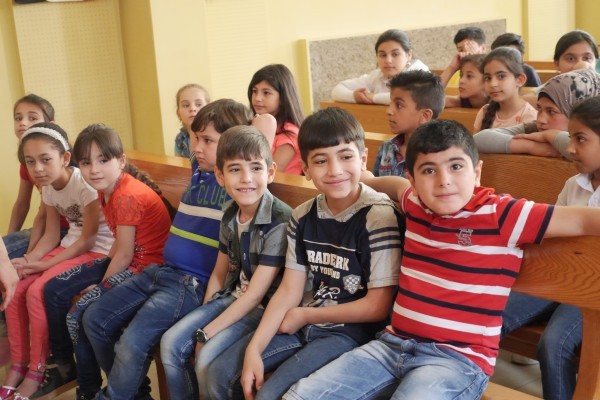
With our Lebanese partner, the team was able to serve at a “makeshift” school for over 40 refugee children who are unable to attend a Lebanese school for various reasons. The children were either behind academically (due to the war and displacement causing a gap in their schooling), lacked the required legal status, or simply could not afford the minimal fees required to attend a school.
Despite the lack of obligation for these children to attend this unofficial school, the kids show up early, enthusiastic and ready to learn.
“It’s a testimony of love and care the kids receive from the church that keeps them coming back,” Kwok observed.
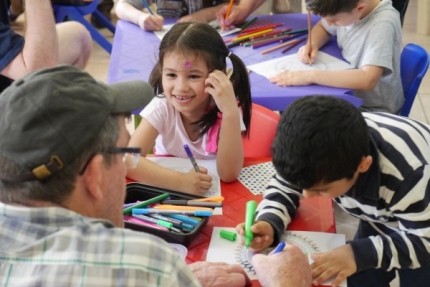
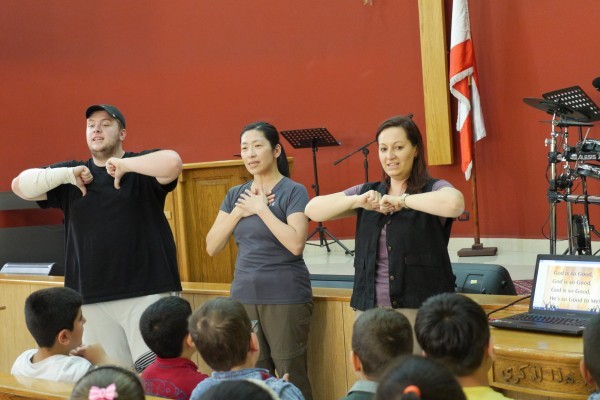
Team members that worked with the kids were able to help them with crafts, math games and chapel services, providing some temporary relief for the underpaid but passionate teachers.
3) Visit refugee families
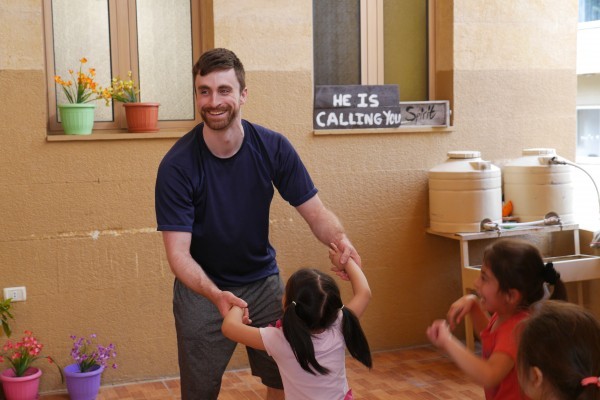
After school, participants were able to be a light to the community by visiting the homes of refugee families (some were families of children who attend the school).
“During these visits we were able to hear stories of their plight from Syria, often filled with some traumatic experiences,” Kwok explained.
They also visited a squatter refugee camp (not run by the UN) in the Bekaa Valley. Working with the local hosts, the team was able to meet with a family of eight (parents and six kids) who had been at the camp for two years. There, they saw the reality of conditions that refugees in camps have to live in.
“Often there are no words when faced with such circumstances, but we also know that God is at work here through this team who are committed long-term,” said Kwok.
4) Lend a hand
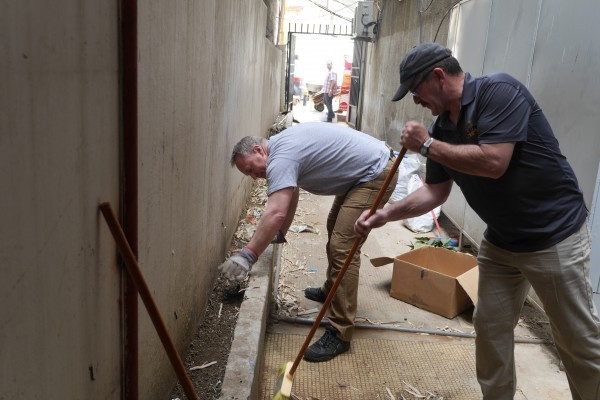
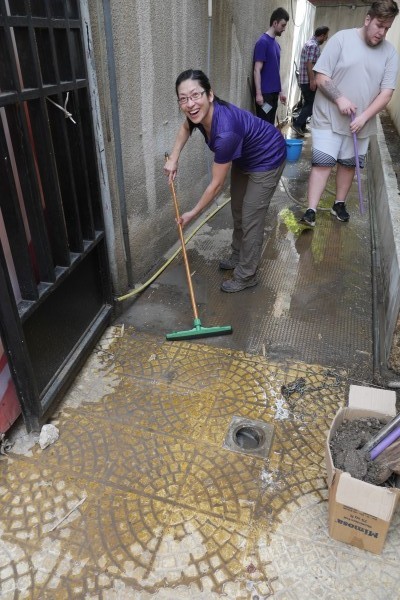
Team members also had the chance to serve through manual labour at our partner’s used clothing store. The store sells items at a discounted price for refugees in need. By spending their time cleaning up the storefront and adding a fresh coat of paint, the store was transformed to be more welcoming and organized.
At the same time, other team members were able help our Lebanese partner prepare meals for refugee kids and seniors in the community. Help in the kitchen provided an “answer to prayer” for the staff who work tirelessly.
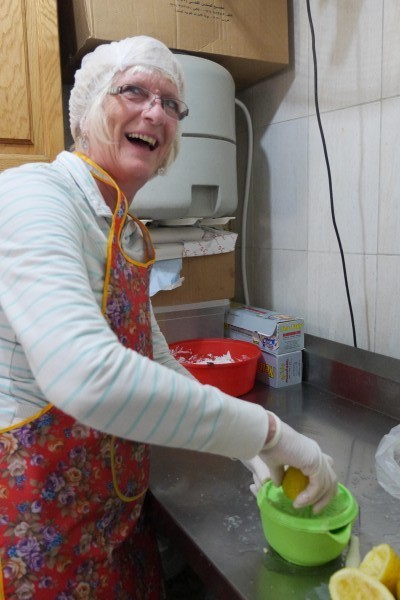
With open and compassionate hearts, the LIFE Team group was able to serve the community in different ways. Their willingness to be available and present meant that they were able to be used in whatever capacity was needed.
One LIFE Team participant said: “What I have experienced the most in short-term teams like this is that it’s about being able to build relationships, taking time to stop, spend time with people and not just “do.’… Maintaining relationships can be such an encouragement to the people here. To know that they have prayer partners all over the world is just as important as the practical things that are needed in getting a job done.”
ARE YOU INTERESTED IN JOINING US ON A LIFE TEAM TRIP? JOIN US
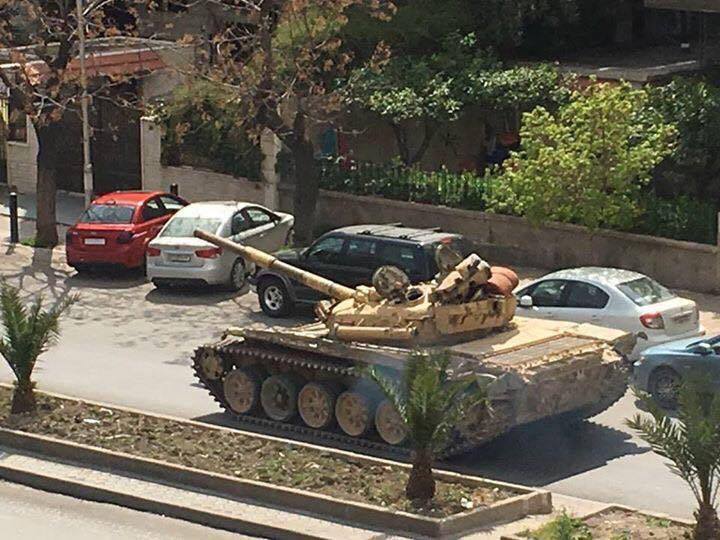
In 2017, the Syrian Civil War entered its seventh year. Bombs hit our local partner in Syria.
Although there was some damage to the building, nobody was injured.
“Last Friday, two bombs exploded in front of the building. I was near the window and shrapnel went through the two windows,” recalled the partner. “The windows and aluminum frames were damaged. Bombs were everywhere.”

It is under these conditions that our Syrian partner works and continues to bring hope to Internally Displaced People (IDPs) in the country. The ongoing crisis continues and the numbers are staggering. Since 2011, almost 5 million people have been forced to flee Syria to another country, while over 6.3 million people are displaced.1 In the last six years, a total of 96,000 civilians were casualties of this civil war.2
Thousands of Syrians live on the edge. Bombs continue to go off and people still struggle to find their next meal and basic medicine.
Trapped within their country, they look for hope. Our mission is to demonstrate God’s love, in word and deed, to those who are hurting and in need.
Bags of Blessings
Chased out by unemployment and gunfire, another Syrian family was forced to leave their home. They left behind loved ones, possessions, and important government documents that would have allowed them to get aid from most churches and charitable organizations. Almost overnight, they became part of the 6.3 million Internally Displaced People (IDPs) in Syria. As refugees in a new city, they had no friends or relatives and no way to get support, until a neighbour guided them to a centre run by our local partner. There they were able to receive aid despite their lack of documentation. Though it may seem simple, our policy of giving aid to the needy, regardless of background or situation, is often as meaningful to those receiving it as the aid itself.
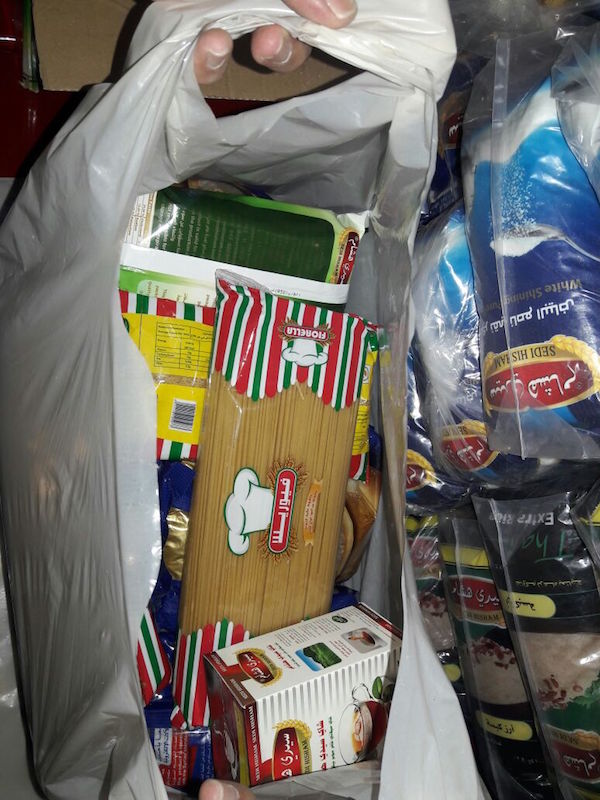
Along with our local partner, we were able to show the love of God to IDPs through the Bags of Blessings program, a monthly package of food rations designed to last for one month. While people initially come to receive the food and non-food items in the bags, the people return because they have gained so much more.
Simple comforts, like blankets and hygiene products, were also provided to children and families who couldn’t afford to buy them, especially as they enter the winter season. Currently, we have the privilege of providing 1,000 Bags of Blessings each month, thereby providing much needed aid to thousands of desperate people in need.
“When we distribute blankets, it gives the children the knowledge that we not only care that they are hungry, but also that they are in good health and they are taken care of.” This deeper care for peoples’ well being is only a small part of the spiritual aid that GAiN and its partner provide. By building friendships with those who are suffering and often alone, the centres provide community to families and individuals who have nowhere else to go. Weekly meetings held for men, women, and children of various age groups are places of emotional and spiritual support, healing, and growth.
The teams at the centres seem to have unending stories of hearts touched and lives changed by the community and hope found at the centres. One team member tells of a woman who regularly sends her grandchildren to the centre. “Mainly in the beginning she sent them for the bag, but she knows us and she talks to people. She’s saying, ‘They have a touch of love. They give. They are generous. They feel with other people.’”
This touch of love goes such a long way. It’s the empathetic aid that brings emotional relief to families in turmoil. Families and individuals in dire need such as
Samira: a mom of two whose husband works every other month. She shares that “if you don’t give us this Bags of Blessings we will die because we don’t have money to buy food. In fact, my daughter is waiting for the bag to do sandwiches for school from the food you send to us.”
Darin: a woman with three children whose husband is working just to cover the rent of the room they are renting it. The only work she can find is cleaning houses and the people are using her and paying only $30 per month, which is nothing for the need they have. She expressed “we are still alive because of the Bags of Blessings you are providing.”
Mary: a lady living with her husband who isn’t working and her son’s family. She receives the Bags of Blessings as the main help for her family.
Samira: a widow who lives with her two sons with their families. The Bags of Blessings feeds almost 20 people in her family.
Each story is of a life that has been impacted due to the Bags of Blessings project.
IF YOU WANT TO LEARN MORE ABOUT HOW YOU CAN SHINE LIGHT IN THE FACE OF DEATH AND DIFFICULTY, CLICK HERE.
Sources:
1. UNHCR (bit.ly/syria_regional_response)
2. Newsweek (bit.ly/newsweek_syria)
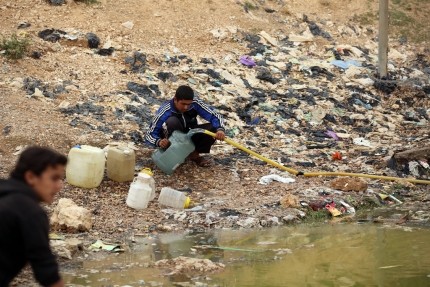
30 October 2017 – The Islamic State of Iraq and the Levant (ISIL or D’aesh) may be largely pushed out of Syria’s Raqqa governorate, but after years of oppression and nearly a year of intense fighting – marked recently by heavy airstrikes – humanitarian needs will continue to be large for some time, the top United Nations relief official told the Security Council Monday.
“Since the beginning of the anti-ISIL offensive in November last year, airstrikes and clashes have resulted in more than 436,000 people being displaced from Raqqa to 60 different locations, including in neighbouring governorates,” UN Emergency Relief Coordinator said briefing the Council via videoconference from Amman, Jordan.
“One conclusion is obvious: the impact of the Syria crisis continues to be profound.”
Expressing deep worry about the impact of fighting and airstrikes on civilians and civilian infrastructure in Raqqa governorate, with scores of civilians reportedly killed in recent months, he said he is also concerned for the safety and protection of civilians at risk from unexploded ordinance throughout Raqqa city, particularly those trying to return to their homes.
“Despite the directive issued by local authorities for civilians not to return to the city until it is deemed safe, the UN anticipates that people will go back to try to check on and protect their homes and their personal assets,” Mr. Lowcock explained.
Further to the east, in Deir Ez-Zor governorate, heavy fighting and airstrikes continue to result in civilian deaths and injuries. Large-scale displacement also continues, with the UN International Organization for Migration (IOM) reporting some 350,000 people displaced since August, including more than 250,000 people in October alone.
As for eastern Ghouta, Mr. Lowcock daily shelling has continued to be reported in recent weeks. Humanitarian access to eastern Ghouta – one of the four de-escalated areas where nearly 95 per cent of Syria’s besieged population lives – has been severely curtailed for months. Since the start of the year 110,000 people have received food assistance, out of an estimated population of nearly 400,000.
“Today the UN and partners delivered food, nutrition and health assistance to 40,000 people, he told the Council, warning however that an alarming number of child malnutrition cases have been recorded there, and more than 400 people with health problems require medical evacuation.
Overall, he said that more than 13 million people inside Syria still need humanitarian assistance. 6.3 million of them are exceptionally vulnerable and in acute need because of displacement, hostilities, and limited access to basic goods and services. “Conflict and violations of international humanitarian law continue to be the principal drivers of humanitarian need, with civilians in many parts of the country enduring massive suffering.”
“Against this background, the UN and our partners continue to implement in Syria one of the largest humanitarian operations in the world,” said Mr. Lowcock who is the UN Under-Secretary-General for Coordination of Humanitarian Affairs, noting, by example that in September, the World Food Programme (WFP) provided food assistance to more than 3.3 million people, the UN Children’s Fund (UNICEF) reached over 1.5 million people, and the World health Organization (WHO) reached over 800,000 people.
He also went on to point out that cross-border assistance provided for in last year’s Council resolution 2165 “has been a lifeline,” allowing the UN to reach millions of people in need in northern and southern parts of Syria. On average, aid was delivered to 2.76 million people a month through cross-border operations between January and August of this year.
“Our experience with cross-line operations from within Syria […] leads us to believe that it would be impossible to reach those people in a sustained manner from within Syria. I therefore regard a renewal of resolution 2165 as essential. Millions of people depend on the activities it mandates,” he underscored.
IF YOU WOULD LIKE TO KNOW HOW GAIN IS INVOLVED, CLICK HERE.
(Source)
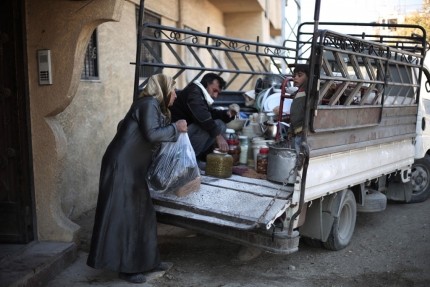
(Image Source: UNICEF/UN066040/Souleiman)
27 October 2017 – The United Nations human rights chief on Friday called on the parties to the conflict in Syria to allow badly needed food and medical supplies to Eastern Ghouta in rural Damascus, describing the situation of at least 350,000 besieged civilians there as “an outrage.”
“The shocking images of what appear to be severely malnourished children that have emerged in recent days are a frightening indication of the plight of people in Eastern Ghouta, who are now facing a humanitarian emergency,” said UN High Commissioner for Human Rights Zeid Ra’ad Al Hussein in a news release from his office (OHCHR).
Eastern Ghouta, on the outskirts of the nation’s capital, is being considered one of the “de-escalation areas” brokered in May by Iran, Russia and Turkey under the Astana process. However, residential areas, including those areas previously spared attack, are now being hit on an almost daily basis by ground-based strikes by Government forces and their allies.
The UN human rights office has also received reports of armed opposition groups conducting ground-based strikes on Damascus.
Various armed groups controlling the area have restricted the work of humanitarian organisations, and clashes between these groups have for months limited civilians’ freedom of movement within the region.
The UN last reached Eastern Ghouta on 23 September. Between January and September, the Government only accepted 26 per cent of requests to deliver assistance to besieged and hard-to-reach areas.
“I remind all parties that the deliberate starvation of civilians as a method of warfare constitutes a clear violation of international humanitarian law, and may amount to a crime against humanity and/or a war crime,” said Mr. Zeid.
Unidentified attackers reportedly stormed and looted a food warehouse in the Eastern Ghouta town of Hamourya on 19 October. The following day several hundred people allegedly looted a second warehouse in the town – a possible sign of growing desperation.
“If parties to a conflict cannot meet the needs of the population under their control, they must allow and facilitate efforts by impartial humanitarian agencies to provide aid, including by granting them the right of free passage,” he stressed.
IF YOU WOULD LIKE TO KNOW HOW GAIN IS INVOLVED, CLICK HERE.
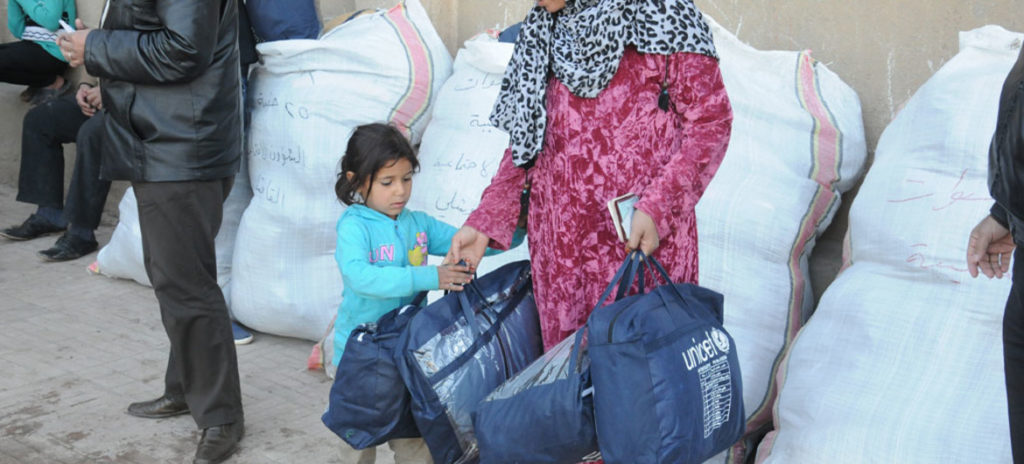
3 October 2017 – Dwindling resources could severely jeopardize efforts to provide refugees and displaced persons across the Middle East with essential winter supplies such as thermal blankets and warm clothing, the United Nations refugee agency has warned.
For many it will be the seventh consecutive winter in displacement, living in tents or in makeshift settlements in near-freezing temperatures.
“We estimate that as many as four million are at extreme risk and need timely and substantial help to properly prepare for the forthcoming winter [and] of these only one in four are likely to get the assistance they need,” said Andrej Mahecic, a spokesperson for the Office of the UN High Commissioner for Refugees (UNHCR), calling for greater funding for the agency’s response plan to ensure help is provided to all in desperate need.
According to estimates, there are nearly 15 million Syrian and Iraqi refugees and internally displaced persons across the region, in Turkey, Lebanon, Jordan, Egypt, Syria and Iraq.
With their needs rising significantly during winter due to the harsh conditions, ensuring sufficient funding for UN agency’s Regional Winter Assistance Plan for 2017/2018 (amounting to $245 million but only 26 per cent funded) is critical, the spokesperson noted.
“Without proper help, many refugee families end up being pushed further into debt and come under increased pressure to resort to desperate steps to try to make ends meet. Women and children are especially affected,” Mr. Mahecic added.
Throughout this autumn (September-November), UNHCR plans to provide cash assistance, distribute winter items and invest in preparation, insulation and repairs of shelters, as well as improve drainage in the camps.
With sufficient funding, the Regional Plan will ensure basic winter necessities – including blankets, clothing, tarpaulin and fuel – are provided to refugees and displaced persons. It will also assist those living below the poverty line with a special assistance programme.
More than 50 per cent of the assistance package is scheduled to be delivered in cash which would allow refugees and the internally displaced to address their priorities and meet urgent needs.
IF YOU WOULD LIKE TO KNOW HOW GAIN IS INVOLVED, CLICK HERE.
September has been the deadliest month in Syria’s civil war so far this year, a monitoring group has said.
The UK-based Syrian Observatory for Human Rights (SOHR) said more than 3,300 people had died in September, including 995 civilians.
Of those civilian deaths, it said about 70% were caused by Russian, Syrian government, or coalition air strikes.
The group bases its casualty reports on information provided by a network of activists in Syria.
It counted 207 children among the civilian dead, along with some 790 pro-government fighters, more than 700 from so-called Islamic State (IS) and al-Qaeda affiliates, and some 550 rebels.
The SOHR says it is a non-political and independent monitoring group, though it does not publish its methodology or verification process.
Many of the deaths have occurred during the fighting between the country’s multiple factions and IS. But air strikes in Syria have continued as the jihadist group has lost most of its territory in the country.
An alliance of Kurdish and Arab fighters has mostly reclaimed the northern city of Raqqa, the group’s former de facto capital.
Its last remaining stronghold in Syria is the province surrounding the eastern city of Deir al-Zour.
Russian air forces are supporting the Syrian military in their attempts to fully retake the city.
A long-running siege of Deir al-Zour was broken by Syrian military forces in early September. In the aftermath, the SOHR said dozens of civilians had been killed in air strikes outside the city.
The Syrian Defence Forces – fighters which oppose Syrian President Bashar al-Assad but are also fighting IS – have also claimed to be hit by Russian and Syrian air strikes, a charge which Russia denies.
And last week, Human Rights Watch said a pair of air strikes by the US-led coalition in March had killed at least 84 civilians.
IF YOU WOULD LIKE TO KNOW HOW GAIN IS INVOLVED, CLICK HERE.
(Source)
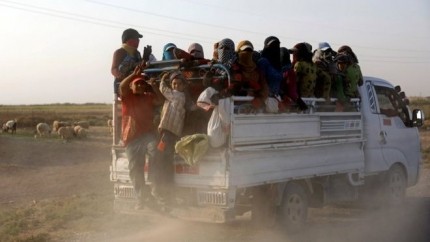
(Image Source: Reuters)
14 March 2017 – The conflict in Syria is the “worst man-made disaster the world has seen since World War II,” the United Nations human rights chief today said, calling for an end to all tortures, executions and unfair trials, and at the very least, for the names and localities of people held in detention or information about where they are buried.
“Today, in a sense the entire country has become a torture-chamber: a place of savage horror and absolute injustice,” UN High Commissioner for Human Rights Zeid Ra’ad Al Hussein told a high-level panel discussion at the Human Rights Council on the situation of human rights in Syria.
The entire conflict is “this immense tidal wave of bloodshed and atrocity,” Mr. Zeid said.
The High Commissioner said that he had recently met with a group of Syrian women whose relatives had been detained or are simply missing. Their relatives are among the “countless people” in Syria to suffer arbitrary detention, torture, kidnapping, and enforced disappearance.
The Office of the High Commissioner (OHCHR) has been refused access to the country, and no international human rights observers are admitted to check on sites where “very probably tens of thousands of people are currently held,” Mr. Zeid said.
Despite a limited access, OHCHR is working alongside the Commission of Inquiry to collect and analyze evidence, building up the basis for criminal proceedings against individual perpetrators.
In his statement, Mr. Zeid noted that the conflict started with torture which spawned “rebel movements, fueling violent extremists and setting the stage for a regional and proxy war.”
Nearly 6.3 million people have been displaced and an additional 4.9 million people – mostly women and children – were forced to seek refuge since 2011, according to UN figures.
His comments come as the conflict in Syria is entering its seventh years, triggered on 15 and 16 March, 2011, when authorities clamped down on demonstrations in Damascus, setting off massive anti-Government protests.
Mr. Zeid called also for “ensuring accountability, establishing the truth and providing reparations,” if Syrians are ever to find peace and reconciliation.
(Source)
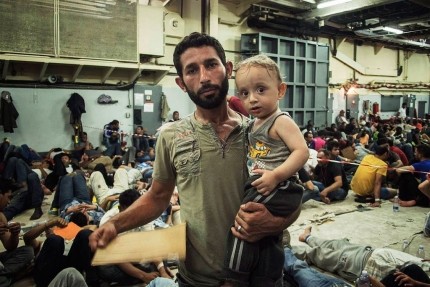
(Photo: UNHCR/A. D’Amato)
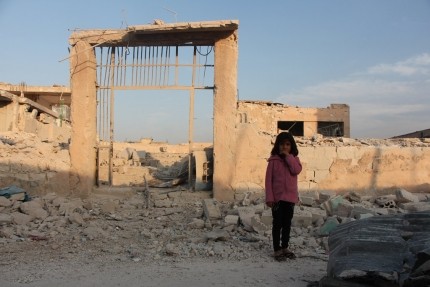
13 March 2017 – The suffering of children in war-torn Syria “hit rock bottom” in 2016 with the highest number of grave violations against them since verification began in 2014, underscored the United Nations children’s agency urging all parties to the conflict, those who have influence over them, and anyone who cared about children to find an immediate political solution to end the conflict.
According to the United Nations Children’s Fund (UNICEF), at least 652 children were killed last year – a 20 per cent increase compared to 2015 – 255 among them were killed in or near a school. Maiming and recruitment of children also rose sharply as violence across the country saw a drastic escalation.
“The depth of suffering is unprecedented. Millions of children in Syria come under attack on a daily basis, their lives turned upside down,” said the UNICEF Regional Director for the Middle East and North Africa, Geert Cappelaere, in a news release announcing the study Hitting Rock Bottom – How 2016 became the worst year for Syria’s children.
“Each and every child is scarred for life with horrific consequences on their health, well-being and future,” he added.
The UN agency also highlighted that challenges accessing several parts of the country obstructed a full assessment of children’s suffering and delivering urgently needed humanitarian assistance.
The most vulnerable among Syria’s children are the 2.8 million in hard-to-reach areas, including 280,000 children living under siege, almost completely cut off from humanitarian aid.
“Beyond the bombs, bullets and explosions, children are dying in silence often from diseases that can otherwise be easily prevented. Access to medical care, lifesaving supplies and other basic services remains difficult,” read the release.
UNICEF also warned that coping mechanisms are eroding both within Syria and across its borders – families are taking extreme measures just to survive, often pushing children into early marriage and child labour.
After six years of war, nearly six million children now depend on humanitarian assistance, a twelve-fold increase from 2012. Millions of children have been displaced, some up to seven times.
According to estimates, over 2.3 million children are now living as refugees in Turkey, Lebanon, Jordan, Egypt and Iraq.
Remarkable stories of courage, hope
However, there are some “remarkable stories” of children determined to pursue their hopes and aspirations, added the UN agency.
Darsy (aged 12), now a refugee in Turkey said: “I want to be a surgeon to help the sick and injured people of Syria. I dream of a Syria without a war so we can go home. I dream of a world without any wars.”
“We continue to witness the courage of Syria’s children,” said Mr. Cappelaere. “Many have crossed frontlines just to sit for school exams. They insist on learning, including in underground schools. There is so much more we can and should do to turn the tide for Syria’s children.”
IF YOU WOULD LIKE TO KNOW HOW GAIN IS RESPONDING TO THIS CRISIS, CLICK HERE.
(Source)
(Image Source: UNICEF)
Saleem is your average ten-year-old boy who likes playing soccer and running around. But three years ago, while his family was fleeing from Mosul, IS fighters caught up to them. They took his father aside and gave him an ultimatum: either convert to Islam immediately or come with them. In order to protect his family, Saleem’s father chose to leave his loved ones. No one has seen or heard from him since.
“They took his father aside and gave him an ultimatum: either convert to Islam immediately or come with them.”
On Tuesday, December 13, GAiN’s DART (Disaster Assistance and Response Team) members arrived on location near Erbil, Iraqi Kurdistan to distribute emergency relief to IDPs (Internally Displaced People) and refugees, people like Saleem and his family, from Mosul and Baghdad.
The team is distributing more than 1000 mattresses, blankets and pillows to people entering the Debaga refugee camp with nothing more than the clothes on their backs. They are also preparing to distribute food packages in Al-Karma and Al-Amal within the next few days.
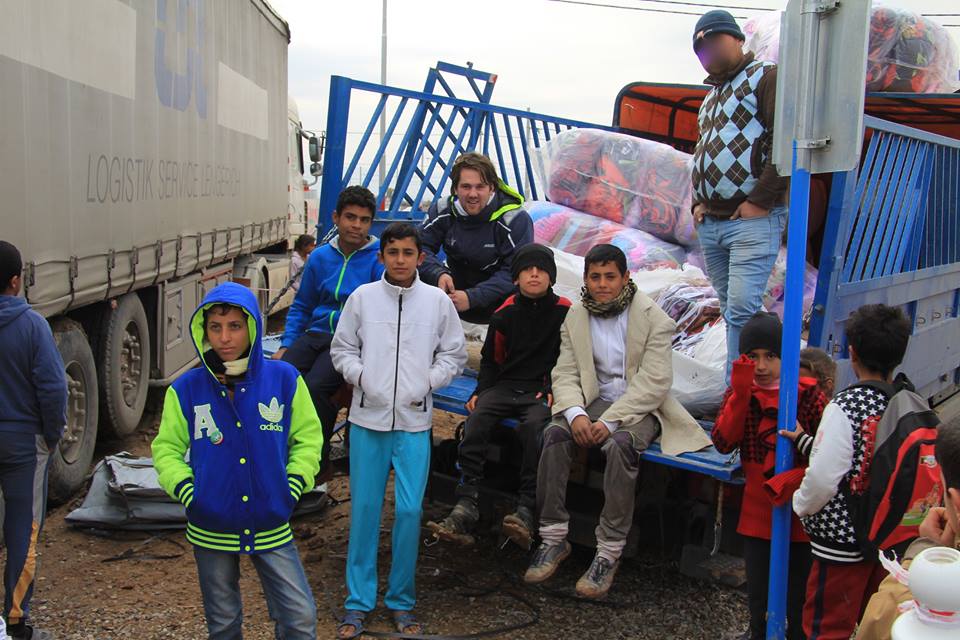
Since October 17, 90,100 people have been displaced from Mosul and have fled to Erbil and Ankawa with the need for food, water and non-food essentials, such as warm clothes and heaters to get through the cold Iraqi winter.
Team members attended a women’s meeting with a local partner at an “improvised container church” outside of Erbil. About 60 women gathered to hear from a psychologist, who has worked with refugees for years, on dealing with suffering and pain. The psychologist not only spoke on scientific matters, but also shared her personal story about finding hope in Jesus. There, team members helped distribute Christmas gifts in the form of cookies, bringing a bit of light and normalcy to a dark situation.
As of now, the end is nowhere in sight. There is still a great need for daily essentials (food, water, shelter and clothing) and the urgency of the needs has only intensified, as winter has arrived.
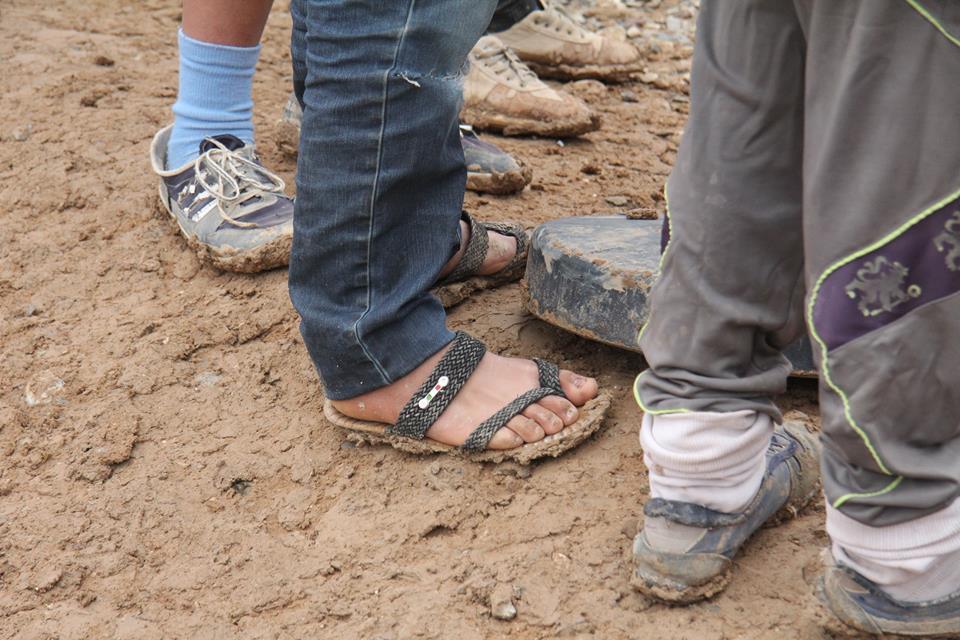
While Canadians experience cold winters, those in Iraq without shelter and proper clothing are at great risk. Providing fuel for heating, blankets and heaters are a high priority, as more than half of people displaced are children under 18-years-old.
Rick from the Netherlands was in Erbil in 2014 to distribute relief in refugee camps. Upon his return, he made a hopeful observation:
“Two years ago the whole city was crowded with improvised refugee camps. In almost every school building, park or church you could find a refugee camp. By now, a lot of these camps are gone. People have found shelter in houses or the refugee camps are transformed to long-term facilities. Tents are replaced by containers and in the unfinished buildings there are apartments built in. It still doesn’t meet my conditions for having a decent life, but it is intriguing to see how people are able to fall down four times, but stand up five. Even coming from the most miserable circumstances people manage to make the best out of their lives.”
“…it is intriguing to see how people are able to fall down four times, but stand up five. Even coming from the most miserable circumstances people manage to make the best out of their lives.”
We still have matching funds available up to the end of the year, which doubles every gift given, and our plan is to continue working with our local partner into the New Year.