
Story by Pau A.
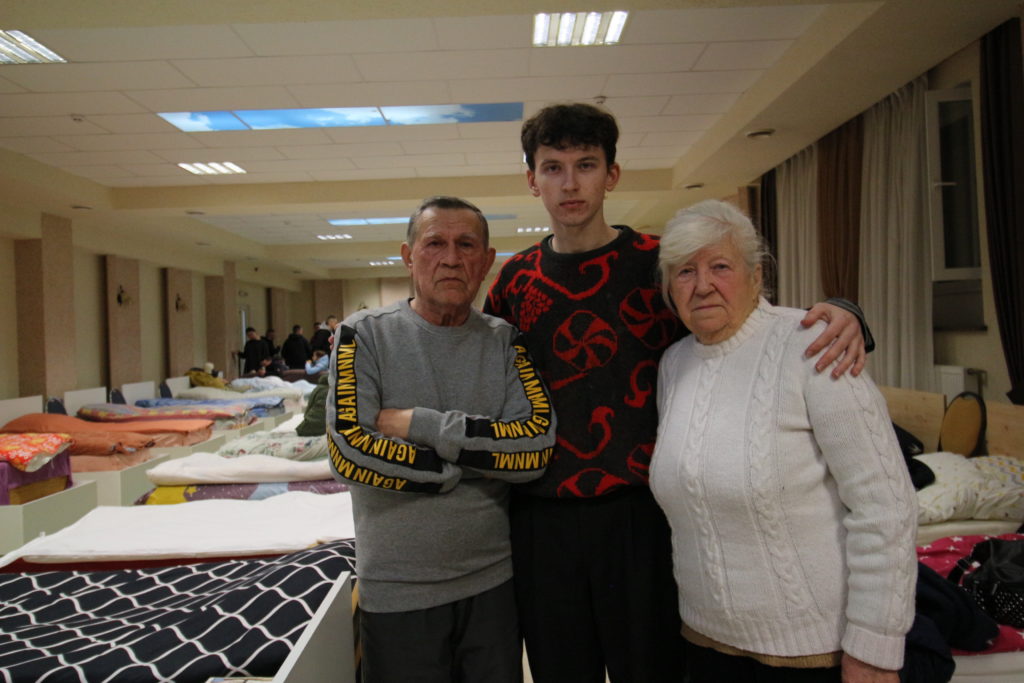
We arrive at the church in Rivne. The sun is going down, but just a little over thirty beds within the big worship hall are already occupied.
One of the pastors tells us the place will be full by midnight. People are still on the run. They usually arrive by 7pm or 8pm, and surely before the 10pm curfew. The next morning, all will be empty again, families will get back on track towards the border, and the church will get ready to host the next group.
Among the few guests who arrived earlier than usual is Artem and his grandparents. He is 19 years old. They were living in Hostomel, one of the towns in Kyiv’s outskirts that is being fought day after day by the Russian army, coveted especially because of its aerodrome.
“We left Hostomel two days ago,” Artem recounts. “Our country evacuated us because in Hostomel there is a lot of bombing and fire, so they evacuated us to Kyiv, and from Kyiv we came here with a bus.”
Artem was living with his grandparents because he was studying for a degree at Kyiv Polytechnic Institute. “Now our study is stopped, we pray that we can continue to study.” Fortunately, he still managed to escape with his grandparents, but unfortunately not his parents and sister. They are living in Kherson. “This is where the war is hitting very bad,” he explains. “We want to evacuate them too.”
That will not be easy as Kherson is one of the cities hardest hit by the war from day one. “We speak with them by phone, messages, Viber, [and] Telegram. They cry because of us, because of our situation, but they feel better for us now [since we could be evacuated]. We pray that they will be good.”
The look in his eyes, as with most of the Ukrainians we met so far, spoke on his behalf before he even pronounced any words. “It’s hard to understand,” he paused. “My friends, my family… We are under big stress. We don’t feel good, but we stay positive.”
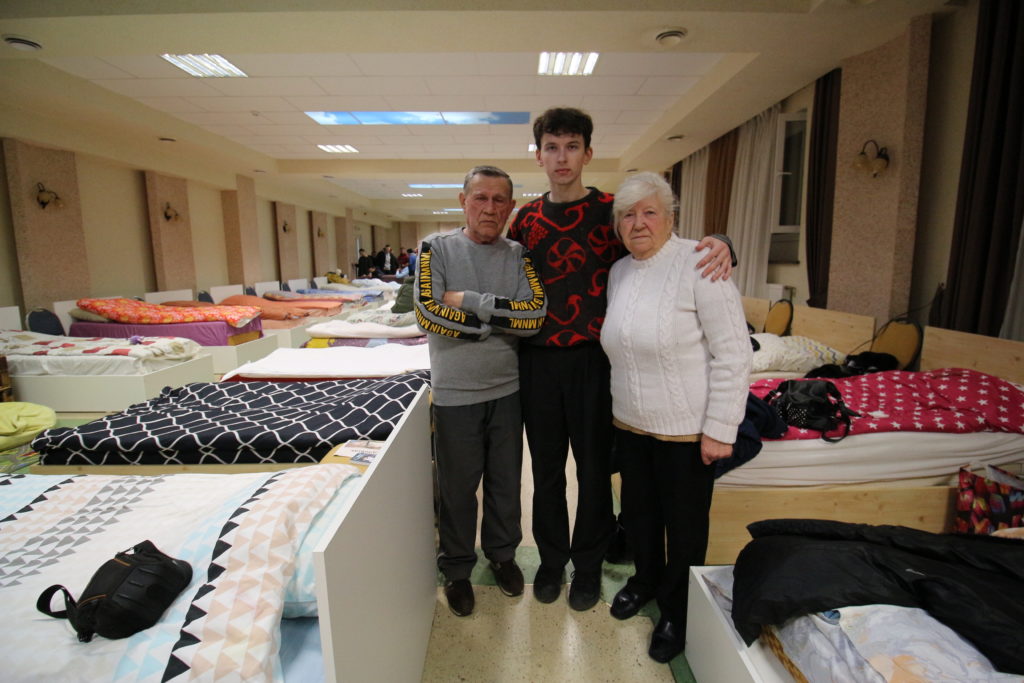
Tomorrow will be another long day for Artem. They plan to arrive in another city closer to the border, and from there maybe to Poland. But for now, probably the most urgent need for him is to stop thinking about tomorrow, at least for a little while. “We just need to sleep now, eat some food, have some fun because we have a lot of stress.”
As soon as Artem’s grandfather finds out we are here to help them, he leans in slightly – an honest sign of gratitude. I tell them this is the least we could do. After I pray for them, we wave goodbye and I wish them all the best, especially thinking of Artem’s parents and sister. We still have a long drive back to Poland ahead of us, but they have a much longer drive back to hope, joy, goals, dreams, and peace of heart.
“The missile hit. Everything was on fire. I heard gunshots. It had hit my neighbours. Blood everywhere. You won’t find an answer. There is no answer. There is nothing left.” – Igor* described what he witnessed.
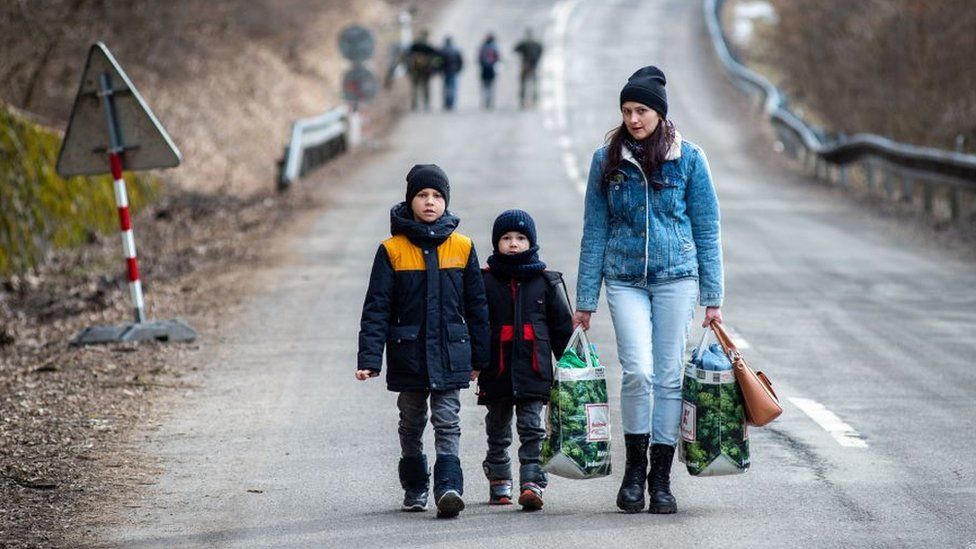
UN aid agencies estimate that millions of people could be displaced following the Russian invasion of Ukraine on February 24, 2022. 6.5 million people have been displaced within the country, and over 3.6 million people who have left the country urgently fleeing to neighbouring countries as they seek safety.
The terrifying sound of air raid sirens blaring throughout Kyiv, and images of locals taking shelter in underground places like subway stations, only show a glimpse of the horrific reality that many families and individuals are currently experiencing.
Many who have already left the country – mostly women and children – have been forced to separate from their husbands, fathers and brothers, as men aged 18-60 have been restricted from leaving the country for possible conscription.
“There are no winners in war, but countless lives will be torn apart.”– Filippo Grandi, head of UN refugee agency UNHCR.
There is great fear and uncertainty for the Ukrainian people. Those who have left everything behind to flee to other countries for safety are in dire need of essentials.
Will you join us as we work to provide emergency relief Ukrainians who are displaced?
Global Aid Network (GAiN), through its offices in Germany and the Netherlands are packing and procuring essential items such as food, medicines, tents, sleeping bags and blankets to ship to their local frontline partners. These much-needed items will be provided to refugees arriving in Poland, Hungary, Romania and the Republic of Moldova.
Refugees are desperately in need of hope, peace, provision and protection. The need for aid is critical. As of April 1st, we have sent 82 shipments via truck. As the number of people affected continues to rapidly increase daily in this complex situation, we continue to help even more people during this critical time and are committed to supporting people in this time of desperation.
“The missile hit. Everything was on fire. I heard gunshots. It had hit my neighbours. Blood everywhere. You won’t find an answer. There is no answer. There is nothing left.” – Igor* described what he witnessed.
UN aid agencies estimate that millions of people could be displaced following the Russian invasion of Ukraine on February 24, 2022. 6.5 million people have been displaced within the country, and over 3.6 million people who have left the country urgently fleeing to neighbouring countries as they seek safety.
The terrifying sound of air raid sirens blaring throughout Kyiv, and images of locals taking shelter in underground places like subway stations, only show a glimpse of the horrific reality that many families and individuals are currently experiencing.
Many who have already left the country – mostly women and children – have been forced to separate from their husbands, fathers and brothers, as men aged 18-60 have been restricted from leaving the country for possible conscription.
“There are no winners in war, but countless lives will be torn apart.”– Filippo Grandi, head of UN refugee agency UNHCR.
There is great fear and uncertainty for the Ukrainian people. Those who have left everything behind to flee to other countries for safety are in dire need of essentials.
Will you join us as we work to provide emergency relief to those who are displaced?
Global Aid Network (GAiN), through its offices in Germany and the Netherlands are packing and procuring essential items such as food, medicines, tents, sleeping bags and blankets to ship to their local frontline partners. These much-needed items will be provided to refugees arriving in Poland, Hungary, Romania and the Republic of Moldova.
Refugees are desperately in need of hope, peace, provision and protection. The need for aid is critical. As of April 1st, we have sent 82 shipments via truck. As the number of people affected continues to rapidly increase daily in this complex situation, we continue to help even more people during this critical time and are committed to supporting people in this time of desperation.
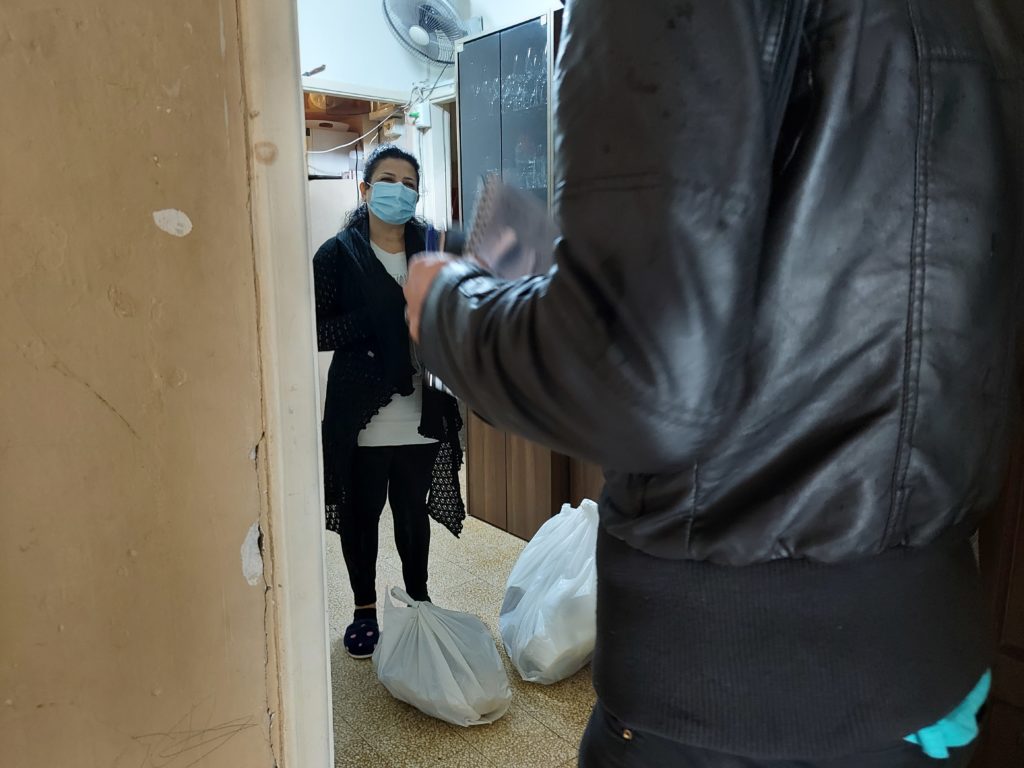
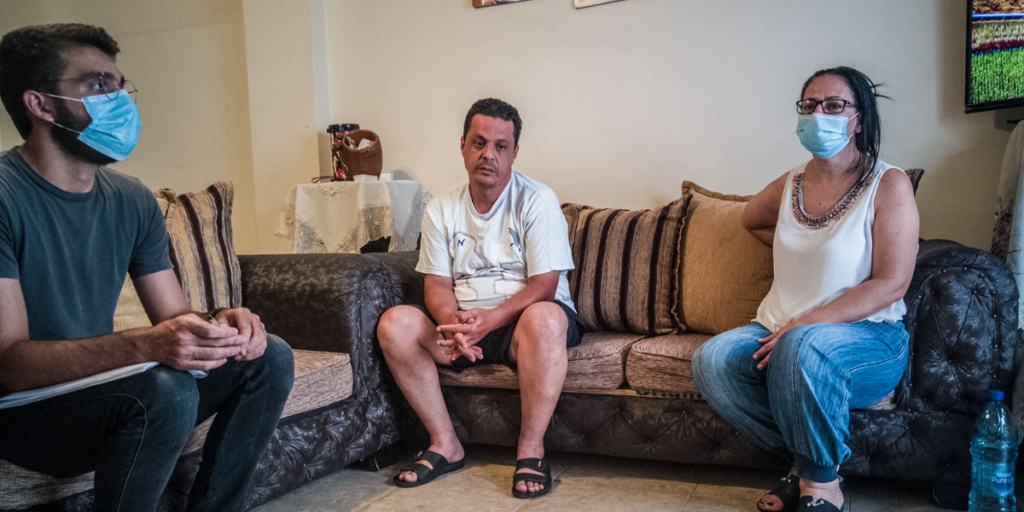
Out of the visits came meaningful interactions and conversations with hundreds of people. Hasnaa and her husband were one of those meaningful conversations. They shared their need with our partners, telling them how this pandemic has been hard on them as a family. The team prayed for them and shared the gospel message with them. Hasnaa and her husband expressed interest when they were invited by the team to go to church. “Hopefully, one day, after the lockdown is over, we will join.”
Our partners also had the opportunity to spend time with a lovely lady named Fadia, who lives with her son, daughter, and grandchildren. She shared that after the explosion her grandson started experiencing recurrent, unexpected panic attacks, requiring special medicines to help him cope. With the current state of the country’s economy, Fadia’s family was unable to afford to go to the doctor and buy the medicine from the pharmacy.
“You have no idea how much you’ve helped us by bringing us this food pack,” Fadia commented. “You’ve taken off some of our burden, really, thank you.”
Another meaningful conversation we had was with Salwa. It started off when the team received a frantic call from her, asking if they could urgently help her. She was so anxious while she waited, that she got very excited when she saw them heading toward her on the street., “You actually came! Other organizations would say they are coming but never show up, I’m just so happy you guys came to see my situation.”
Salwa explained that it had been months since she could afford to buy food. “You have no idea how much I needed this and how I appreciate this food you brought,” she said through tears.
While some of the team was talking to Salwa, another team member noticed a boy staring at him from inside, so he went to him. The boy was Salwa’s son. A team member sat with him and talked about basketball. The conversation moved to Jesus, how much Jesus loved him and that God has a great plan for him.
Salwa told the team that she was happy that they had a spiritual conversation with her and her son. She shared, “I want my son to grow up and be like you. [To grow up to] love God the way you all do and to help others.”
After prayerfully considering the situation in Lebanon and the people we are serving, our desire is to continue to provide until December 2021. We’ll continue to provide food packs for 400 families (an additional 100 families due to the worsening situation), medicine and medical treatment for those in need, along with minor house repairs, basic home needs like beds, mattresses, blankets, and appliances.
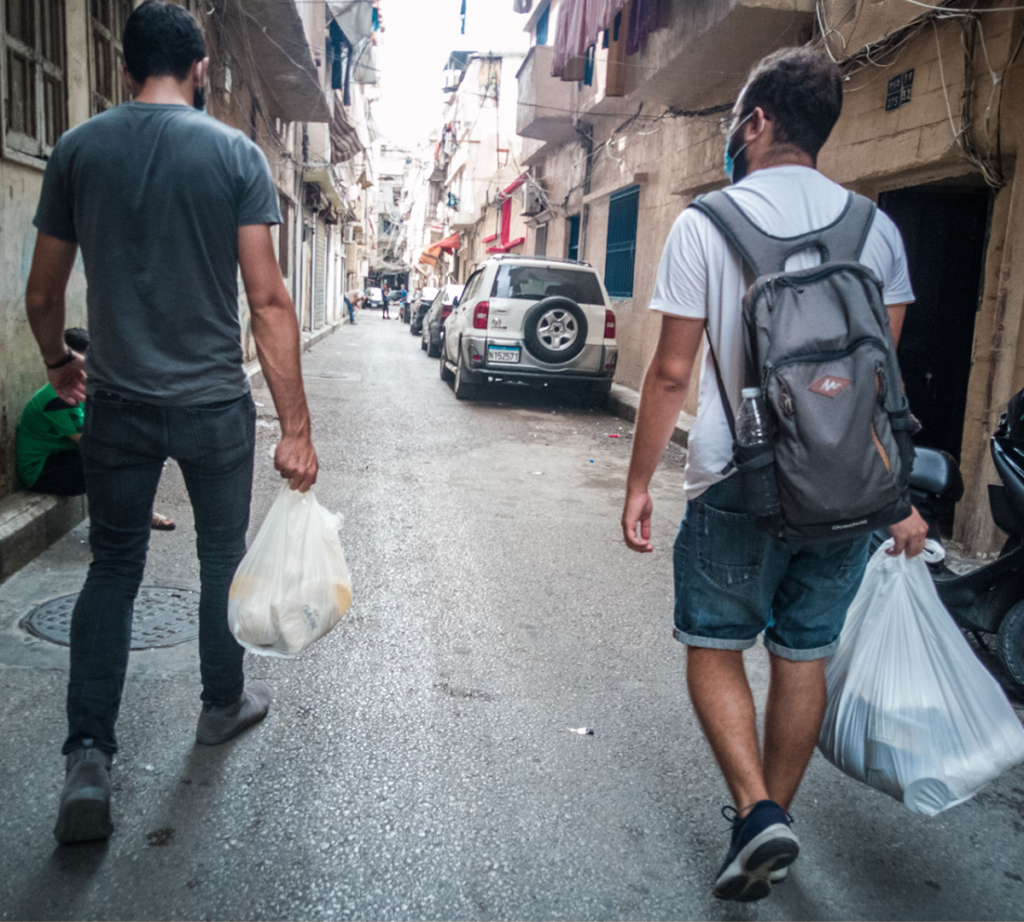
After the Beirut explosion on August 4th, our local partners in Lebanon formed a team to help coordinate cleanup and repairs efforts. Six staff, 11 interns and disciples, and several volunteers joined the effort to visit homes, churches, schools and hospitals to help with cleaning and clearing the glass and rubble caused by the explosion. The team was able to join in the efforts to clean 120 homes, two schools, four churches and one hospital.
They did a field survey of homes affected by the explosion and assessed ways they could help the affected families. The needs varied from urgent repairs to walls, doors, windows, glass replacement, replacement of appliances to personal needs like food, medicine, elderly and baby care products. Teams were divided into smaller groups that went back to these homes to bless families by helping provide some of their needs.
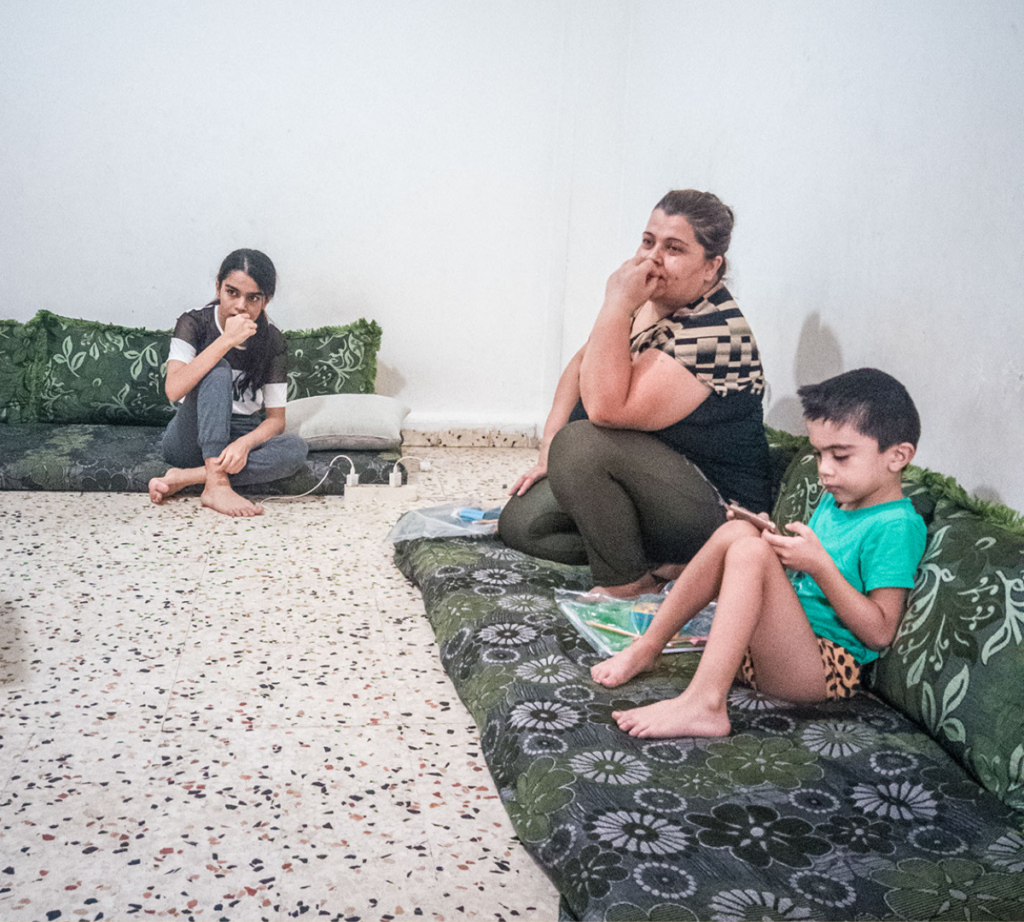
They met Anna through a referral by a family that we were helping. Anna is a single mother who raised three boys on her own after her husband left them. She used to work at a school selling snacks and cooking for elderly people around her neighborhood. After the Lebanese Revolution started in October and the COVID-19 lockdown happened in March, she lost her job at the school due to school closures.
As if that wasn’t enough, she also lost her job cooking for the elderly after their families requested she stop to prevent possible spread of the virus. Anna was left without a job and has since struggled to afford food for herself, leaving her going to bed most nights on an empty stomach.
Then the explosion happened and Anna was left devastated and lost hope completely. When our team showed up on her doorstep with food packages, she was overjoyed. She hadn’t received this kind of help or generosity from anyone.
After the team fixed things around her house, they shared about who they were and why they do what they do. “We told her our aim is to show God’s love and tell everyone about Him,” explained our partner. “She was very open since she was from a Christian background.”
They spent time praying for her and when it was done she cried, “Your prayer is so beautiful from the heart. I don’t deserve it. I’m so far away from God and I’m not a good person. I don’t talk to Him or anything. But sometimes I look up and speak to Him but I don’t feel He listens to me.”
“God is close to you and He loves you,” they reassured her. “He has been taking care of you. Whatever you say, He listens to you. Keep talking and praying to Him.”
Anna was so touched that she invited the team to come back another time. Once they left, she sent them a voice note saying, “I want to thank you all from the bottom of my heart. Thank you for thinking about us and helping us. I’m so happy that everything in the food pack was what I really needed.”
The team has done 450 connections so far with the number expected to reach our 500 families target in the coming week. By early September, have visited 320 homes of the 420, blessing the people and providing repairs, food packs, medicine and the message of hope in a loving God who truly loves and cares for them. Of those they visited and blessed, 13 people made the decision to commit their lives to Jesus.
Story by Angelika S.
There are places you would never choose to call your home. There are lives you would never choose to live. There are destinies you would never choose to experience.
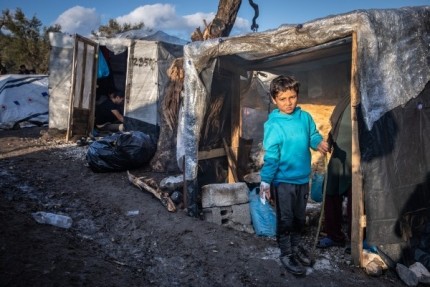
All of these seem to be combined in a place called Camp Moria: 17,000 to 20,000 people crammed together in a place designed for not more than 3000, the smell of decay hanging in the air, overflowing garbage bins everywhere, children playing in the dirt, people queueing up for hours for getting food, taking a bath or getting medical help.
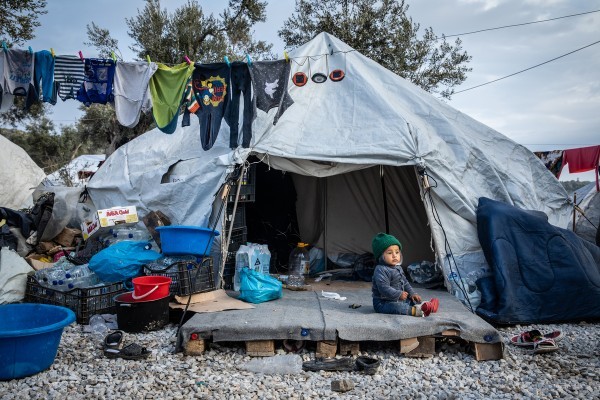
When you take a walk through the camp you can look into thousands of faces, faces that are marked by the traumatic experiences they have survived. The list of these experiences is long: war, armed conflict, violence, civil unrest, starvation, persecution, human loss, loss of belongings and much more. The stories behind these faces may be similar, and yet they are so unique. Every single person in the camp has his or her own story and this story had a personal impact on his or her life. There may be despair, hopelessness, depression, or even anger or aggression.
And this is what the camp reflects at first glance: an atmosphere of darkness, lifelessness, and low aspirations. People’s lives have been torn apart, left with only the debris of their dreams they once wished to live, like a forest burned down by a devastating fire.
Yet, if you have a closer look, you may also see something else. In the midst of all the rubble there are beautiful flowers making their way through the ashes.
Someone has made a tiny, beautiful garden around his hut, paving a path of white stones from the gate to the entrance of his hut.
In the same neighbourhood someone has created an idyllic archway to his hut decorated with plants and flowers.
A small girl dressed like a princess gives you a bright smile when you pass by and wave at her.
A mother is sweeping in front of her home, which is tiny and poor but neat and clean.
A family of six invites you to their home that consists of one single room. They have prepared a “table“ with tea, biscuits, and their national sweets. An atmosphere of love and generosity welcomes you. They are interested in your life, your family and your background. ‘You are always welcome to visit us‘, they tell you as you leave them to continue your walk through the camp.
In the midst of the darkness there is light, in the midst of the rubble of broken dreams there is hope, in the midst of the ashes of torn lives there is beauty. But we have to open our eyes to see this. It may not be visible at first glance or on the surface—it can only be seen when you take a deeper look, when you look beyond the obvious.
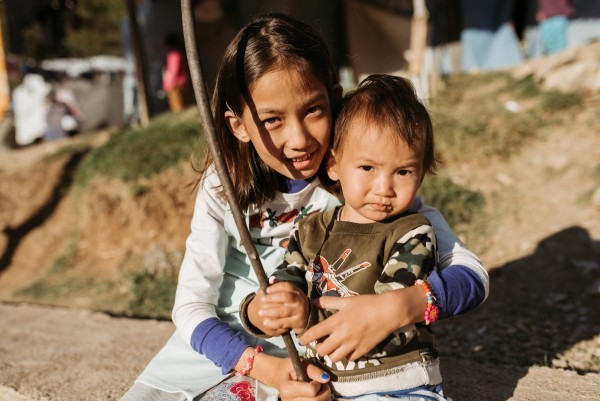
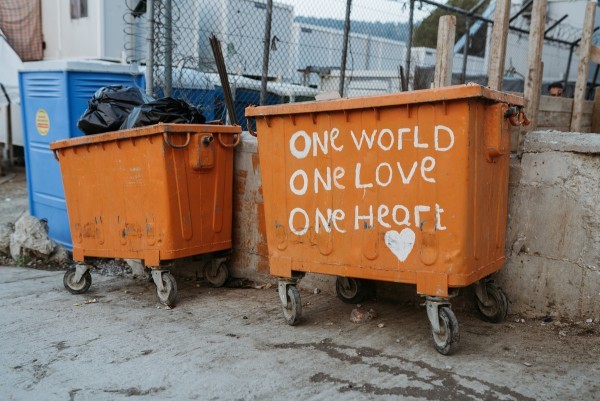
This is also true for our own lives. There may be hardships, there may be pain or loss; still it is not our surroundings that determine our lives, but the way we deal with them. We can make the ashes of our lives blossom and bring forth a beauty that cannot be compared with anything else.
Together, we can help provide communities like Moria with food and other necessities during this time, as well as help prevent and slow the spread of COVID.
WILL YOU PARTNER WITH US?
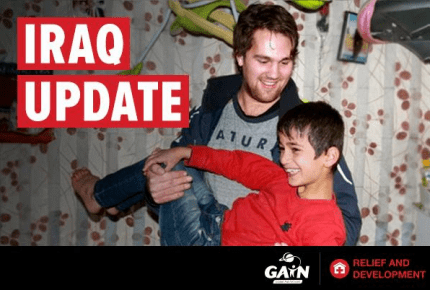
Saleem is your average ten-year-old boy who likes playing soccer and running around. But three years ago, while his family was fleeing from Mosul, IS fighters caught up to them. They took his father aside and gave him an ultimatum: either convert to Islam immediately or come with them. In order to protect his family, Saleem’s father chose to leave his loved ones. No one has seen or heard from him since.
“They took his father aside and gave him an ultimatum: either convert to Islam immediately or come with them.”
On Tuesday, December 13, GAiN’s DART (Disaster Assistance and Response Team) members arrived on location near Erbil, Iraqi Kurdistan to distribute emergency relief to IDPs (Internally Displaced People) and refugees, people like Saleem and his family, from Mosul and Baghdad.
The team is distributing more than 1000 mattresses, blankets and pillows to people entering the Debaga refugee camp with nothing more than the clothes on their backs. They are also preparing to distribute food packages in Al-Karma and Al-Amal within the next few days.
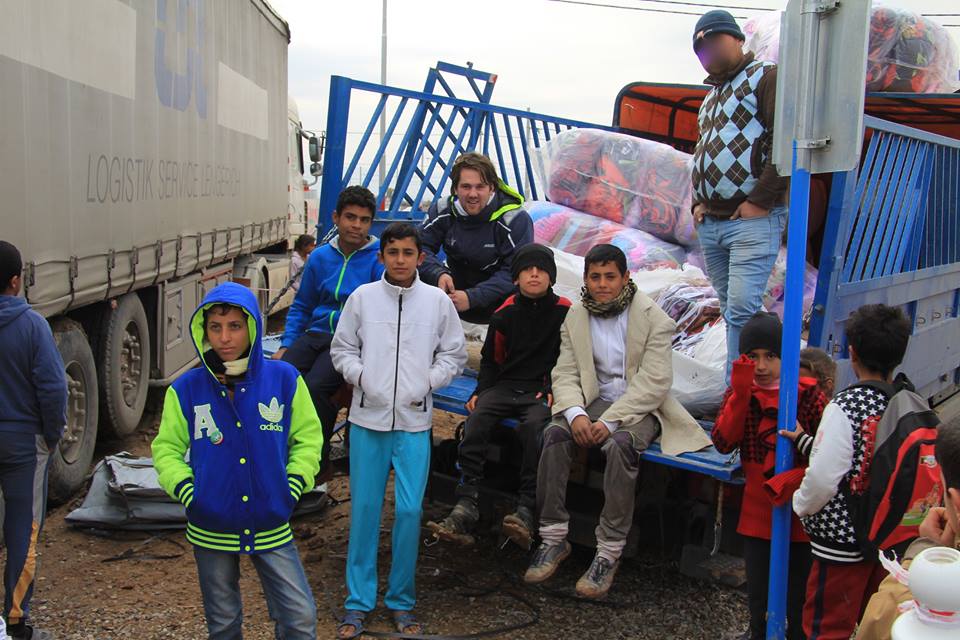
Since October 17, 90,100 people have been displaced from Mosul and have fled to Erbil and Ankawa with the need for food, water and non-food essentials, such as warm clothes and heaters to get through the cold Iraqi winter.
Team members attended a women’s meeting with a local partner at an “improvised container church” outside of Erbil. About 60 women gathered to hear from a psychologist, who has worked with refugees for years, on dealing with suffering and pain. The psychologist not only spoke on scientific matters, but also shared her personal story about finding hope in Jesus. There, team members helped distribute Christmas gifts in the form of cookies, bringing a bit of light and normalcy to a dark situation.
As of now, the end is nowhere in sight. There is still a great need for daily essentials (food, water, shelter and clothing) and the urgency of the needs has only intensified, as winter has arrived.
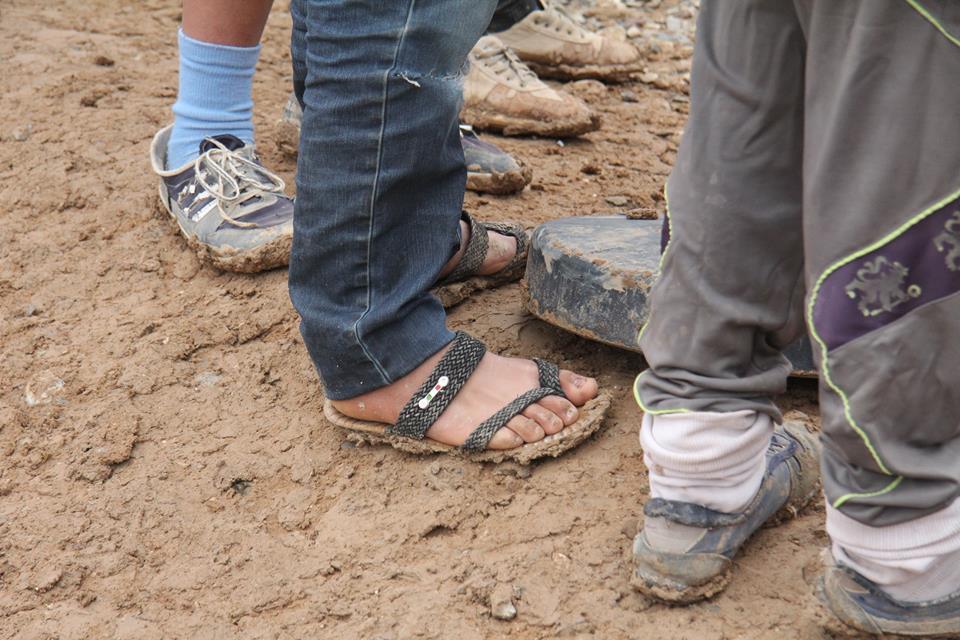
While Canadians experience cold winters, those in Iraq without shelter and proper clothing are at great risk. Providing fuel for heating, blankets and heaters are a high priority, as more than half of people displaced are children under 18-years-old.
Rick from the Netherlands was in Erbil in 2014 to distribute relief in refugee camps. Upon his return, he made a hopeful observation:
“Two years ago the whole city was crowded with improvised refugee camps. In almost every school building, park or church you could find a refugee camp. By now, a lot of these camps are gone. People have found shelter in houses or the refugee camps are transformed to long-term facilities. Tents are replaced by containers and in the unfinished buildings there are apartments built in. It still doesn’t meet my conditions for having a decent life, but it is intriguing to see how people are able to fall down four times, but stand up five. Even coming from the most miserable circumstances people manage to make the best out of their lives.”
“…it is intriguing to see how people are able to fall down four times, but stand up five. Even coming from the most miserable circumstances people manage to make the best out of their lives.”
We still have matching funds available up to the end of the year, which doubles every gift given, and our plan is to continue working with our local partner into the New Year.
IF YOU WANT TO GET INVOLVED WITH OUR RELIEF WORK IN IRAQ, CLICK HERE.
*Name changed for safety reasons.
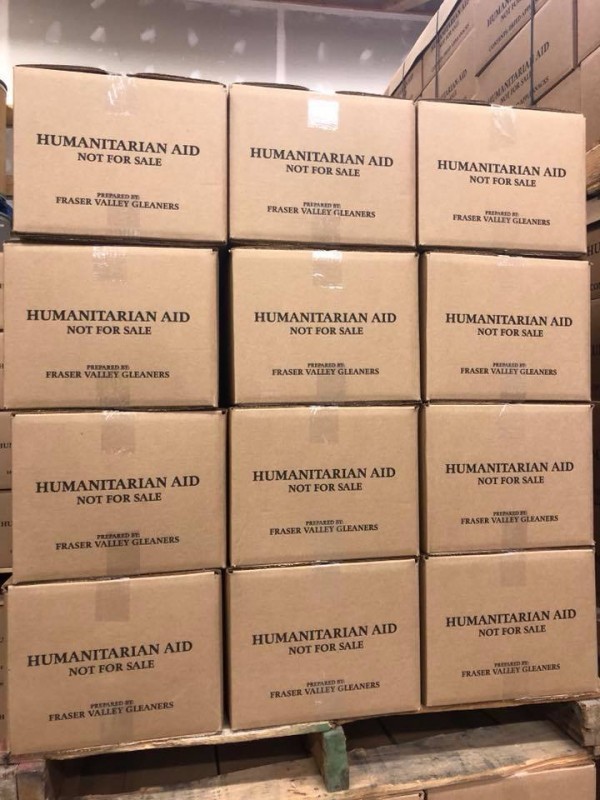
Fraser Valley Gleaners has been an integral partner of ours!
Click here to see why.
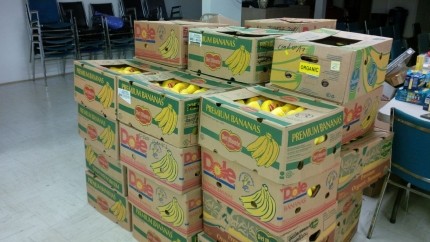
Refugees are resettling in Canada with very little in hand, so when an opportunity arose to supply some much needed items to a local centre that aids refugees, we happily took it.
On Friday February 5, 2016, we loaded up two trucks full of donated items and took four trips to the Middle Eastern Friendship Centre, a place where new settlers from the Middle East and Africa could gather together in Surrey, B.C.
While GAiN has initiatives focused on helping Syrian IDPs (Internally Displaced People) within Syria, refugees that come into Canada are not usually our primary focus.
”We have chosen to help internally displaced Syrians whose plight is not often highlighted in the news media,” explained Aaron Rogers, GAiN’s Chief Operations Officer. “However, because we received this donation of goods, there was an opportunity through a local organization to support refugee families [from all different countries] coming into Canada.”
Back in August 2014, we received a generous donation which just so happened to align with the needs of the Middle Eastern Friendship Centre.
“Do you have a need for diapers? I have all these diapers, would you be interested?” Rogers asked the centre’s founders, as we had just received two pallets of diapers from a donor.
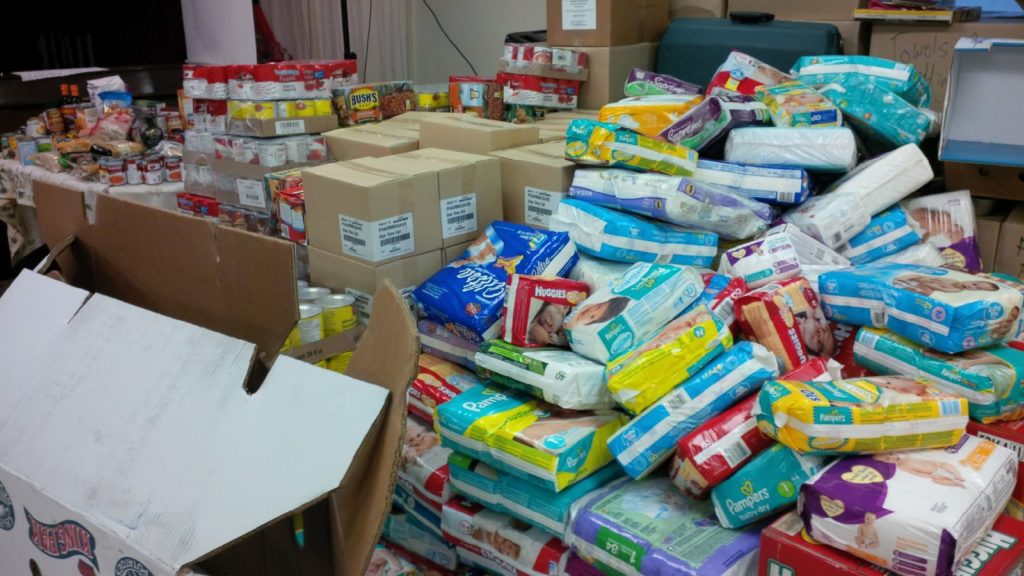
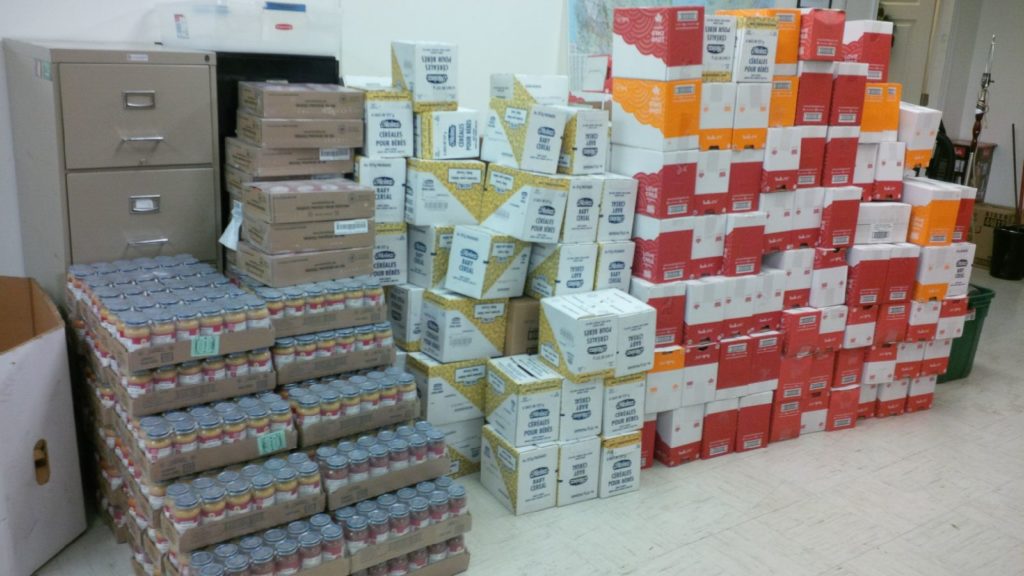
“His jaw just dropped,” Rogers recalls. “He and his wife were in tears. They were saying they have all these families coming in with babies and they have nothing to give them when they come to the centre.” At the time they had furniture and other items available but were lacking necessities such as canned food and diapers.
Fast forward to present day and the need for donated goods is still great. Canada has reached the commitment to resettle 25,000 Syrian refugees. As of March 22, 2016, 26,202 refugees from Syria have landed in Canada since November 5, 2015, according to statistics from Citizenship and Immigration Canada.
So, when we received pallets of diapers, canned food and baby cereal from the same donor from two years before, Rogers had the Middle Eastern Friendship Centre in mind.
The significance of refugees’ needs was reflected in the founders’ priceless reaction to news that we would be donating more goods. “He was just in tears. It was an answer to prayer for him.”
When GAiN received the goods, Rogers recruited some of the office staff located at our headquarters in Langley, BC to load up trucks to drive the donated goods to the centre.
“We have an opportunity to help refugee families coming into Canada, many of them from Syria and Iraq. It’s not one of our projects, but …we’re also looking for opportunities to help people. As this opportunity was presented to us by the Middle East Friendship Centre, we were thrilled to take it on and bless them.”
IF YOU WANT TO LEARN MORE ABOUT GAIN’S WORK IN SYRIA, CLICK HERE.
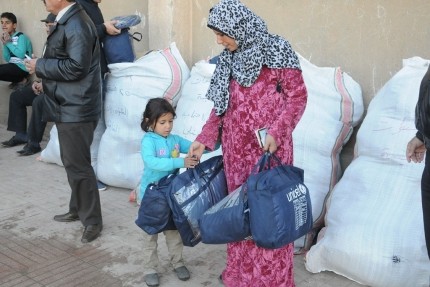
2 February 2016 – With four million Syrian and host community children in need of education and no let-up in sight in the fighting tearing the country apart, the United Nations and its partners are seeking $1.4 billion at a major conference in London on Thursday to save the current youth generation.
“The scale of the crisis for children is growing all the time, which is why there are now such fears that Syria is losing a whole generation of its youth,” said UN Children’s Fund (UNICEF) Regional Director for the Middle East and North Africa, Peter Salama, whose agency is coordinating the ‘No Lost Generation Initiative’.
“As a result of all the work being done by partners and donors, education and protection for children are now being prioritized. But what we must see in London is the step-change necessary to bring all children back to learning; to protect those who are at risk of dropping out; expand safe and inclusive learning environments; recruit and train more teachers; improve the quality of education, and support the development of technical, vocational and life skills opportunities for youth.”
The London conference is being co-hosted by Britain, Germany, Kuwait and Norway, and leaders from more than 30 countries are expected to attend, with the aim of raising new funding to meet the immediate and longer-term needs of those affected by the crisis.
Nearly five years into the Syrian war, some four million Syrian and host community children and youth aged 5-17 years are in need of education assistance, including 2.1 million out-of-school children inside Syria and 700,000 Syrian children in Turkey, Lebanon, Jordan, Iraq and Egypt.
Last year, the combined efforts of Governments and international partners helped more than one million children and youth inside Syria benefit from formal or non-formal learning opportunities. But with no political solution in sight to one of the most brutal conflicts the world has seen in decades, the number of children missing out on an education continues to climb.
Governments at the London meeting will also be urged to put more pressure on parties to the Syria conflict and those who support them to end attacks on schools and other places of learning, in accordance with international humanitarian law.
According to UNICEF, the killing, abduction and arrest of students and teachers has become commonplace, as have arbitrary attacks on schools. About one in four schools cannot be used because they have been damaged, destroyed or are being used as shelters for the internally displaced or for military purposes.
The No Lost Generation Initiative was set up in 2013. By the end of 2015 1.2 million children and youth inside Syria benefitted from improved formal and non-formal learning opportunities and more than 650,788 in Egypt, Iraq, Jordan, Lebanon and Turkey received school supplies or support through cash grants.