
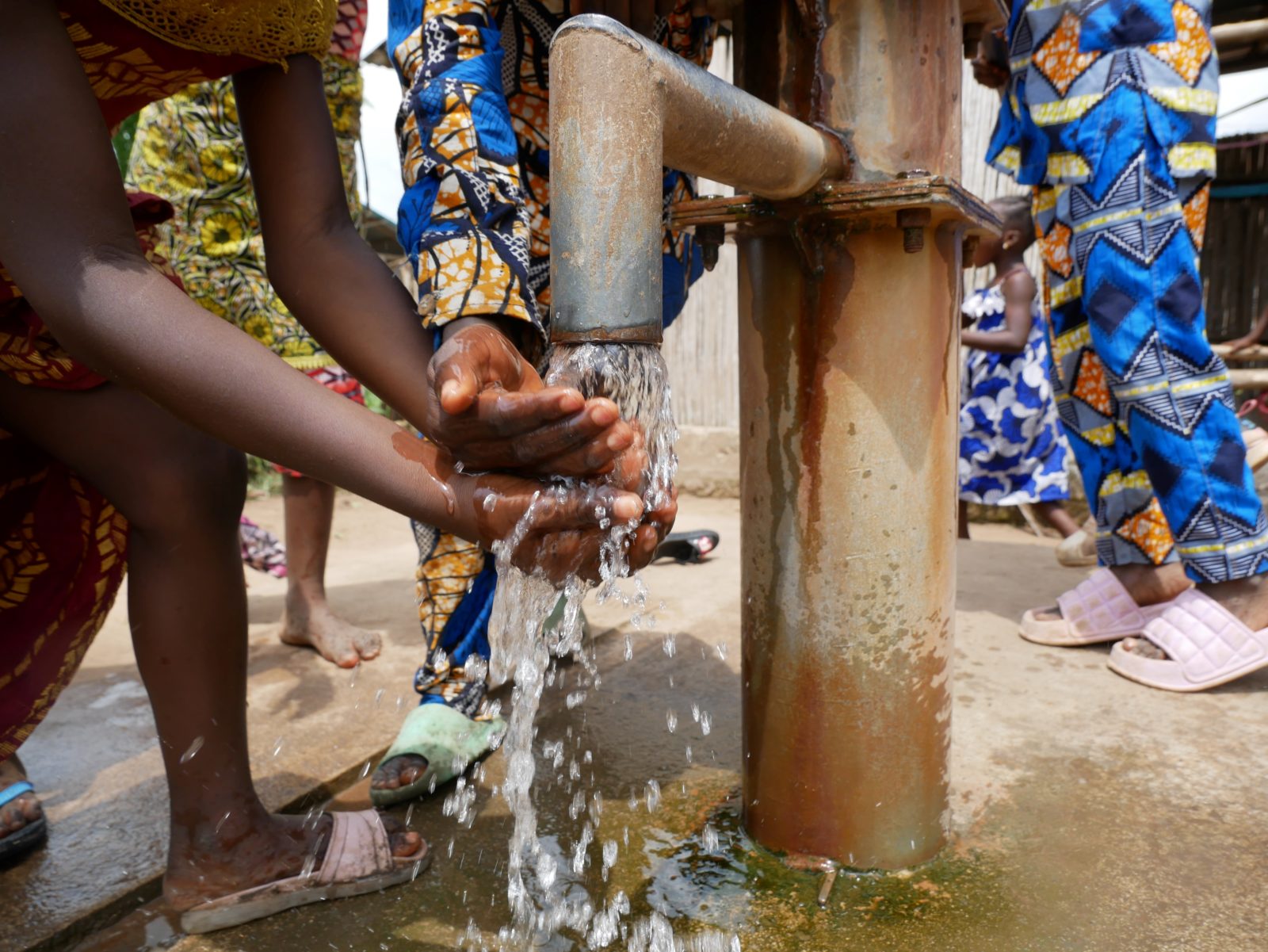
There is a desperate need around the world for women to be educated about their menstrual cycles and equipped with feminine hygiene products.
According to the World Bank, an estimated 500 million women and girls globally don’t have access to the facilities they need to manage their periods. Many of these women also lack any kind of knowledge about their cycle and what is happening to their bodies during this time.
While on a LIFE Team trip to see GAiN’s water strategy first-hand in Tanzania, there was a unique opportunity for GAiN’s Water for Life Initiative (WFLI) to respond to this need. In addition to the usual tasks of building a well pad and engaging with villages and the local church, the team decided to give away menstrual hygiene packages and educate girls on their cycles. This form of distribution and training is the first of its kind that GAiN has ever done.
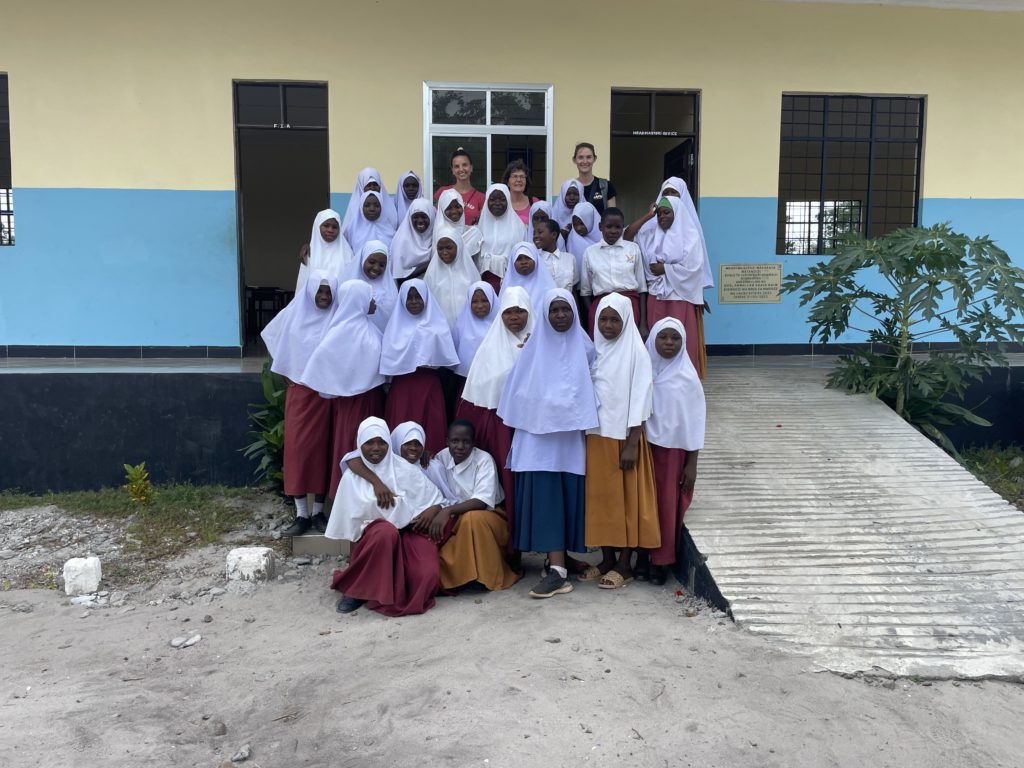
“We went to a secondary school in Kibiti, Tanzania where GAiN is currently working on providing a well,” said Monique Lieuwen, Project Manager for WFLI. “A lot of the kids walk over an hour to get to school.”
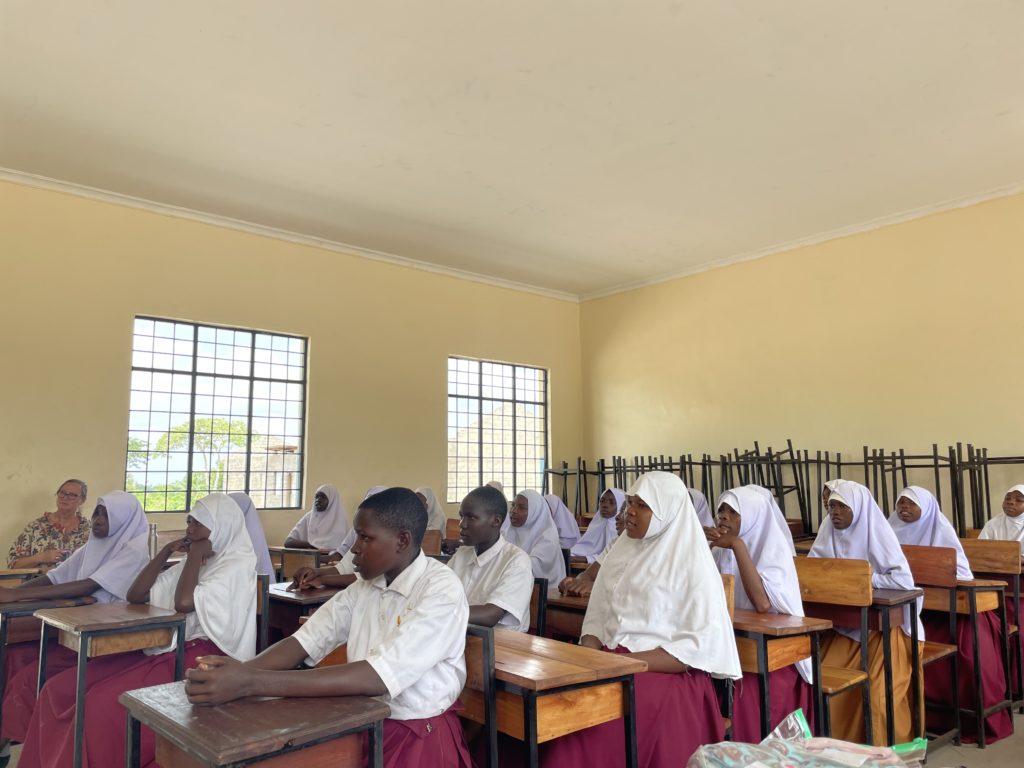
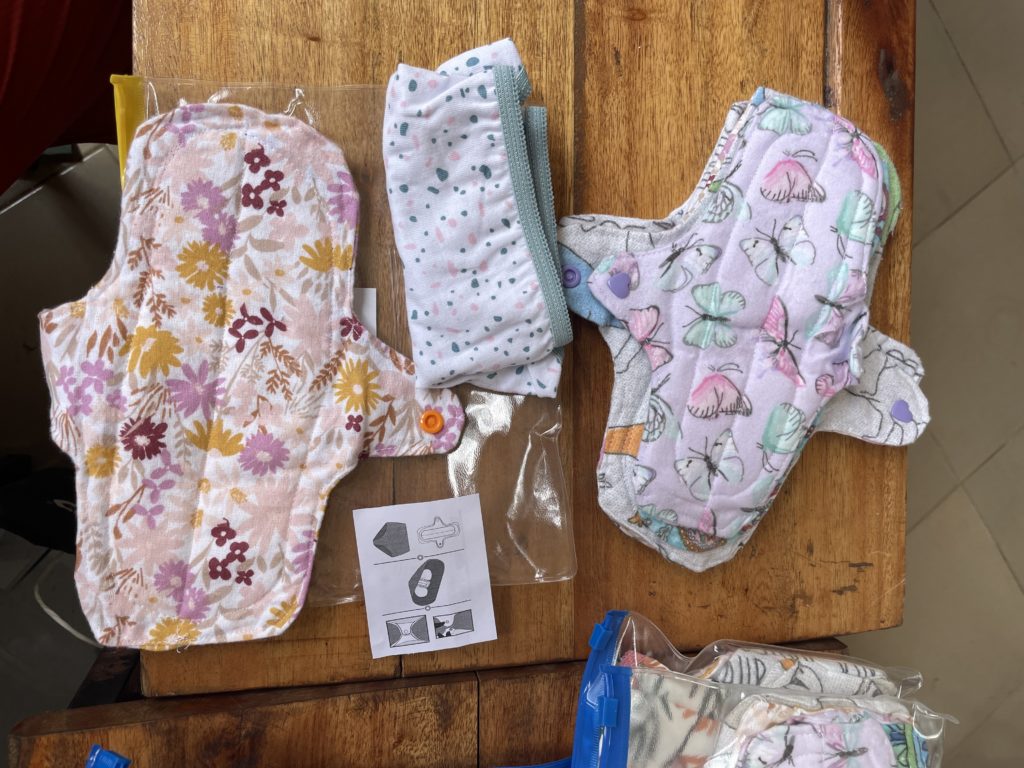
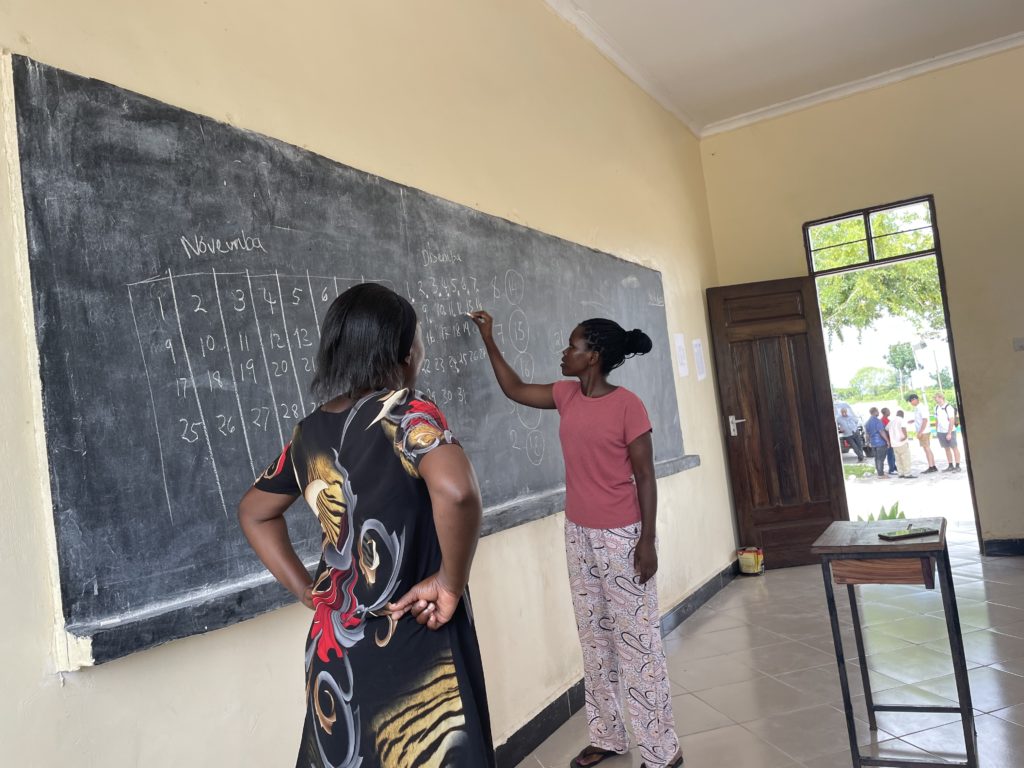
Monique explained how she and, Jess, Community Health Project Manager for WFLI, as well as two other female LIFE team members and GAiN Tanzania staff members Neema and Oliva all arrived at the school and met with the principal, who directed them to a private classroom. There they met with a group of 26 female students who were approximately ages 14-18. Each girl received a menstrual hygiene package, which came in different sizes and consisted of five reusable pads, one pair of underwear and a set of instructions. These pads were sewn by volunteers from Australia and are made from towels and flannel with a snap underneath to keep it secure.
“At first, the girls were a little shy and nervous, but they opened right up,” Monique shared. “It was awesome. They were so engaged and excited, they had never received anything like this before. It wasn’t just a distribution– it was education.”
Neema and Oliva taught the girls how to use the reusable pads and keep track of their cycle. In return, the girls shared about their experience in dealing with their periods. Instead of pads, they would use cloth and then refold it to keep using it over and over. The lack of proper hygiene products is made worse by the shame culture surrounding a woman’s cycle. Many girls are forced to stay home or stay away from school to reduce the risk of anyone finding out that they are on their period.
“When we gave them a pack, they hid it under their head coverings,” Monique recalled. “They didn’t want anyone to see them.”
Because of the embarrassment of being on their period, girls miss one week of education out of every month and sometimes drop out of school entirely. Mothers also succumb to shame and refuse to teach their daughters about menstruation, creating a generational pattern of silence and secrecy.
In an attempt to break some of the stigma and mystery associated with periods, Jess, Neema and Oliva crafted a simple menstrual training for the girls. The team not only discussed the physical function of a period, but explained that this shared female experience is a way to support one another socially. They also encouraged the students to talk with one another about their periods and look out for one another as a way to reduce feelings of shame and isolation.
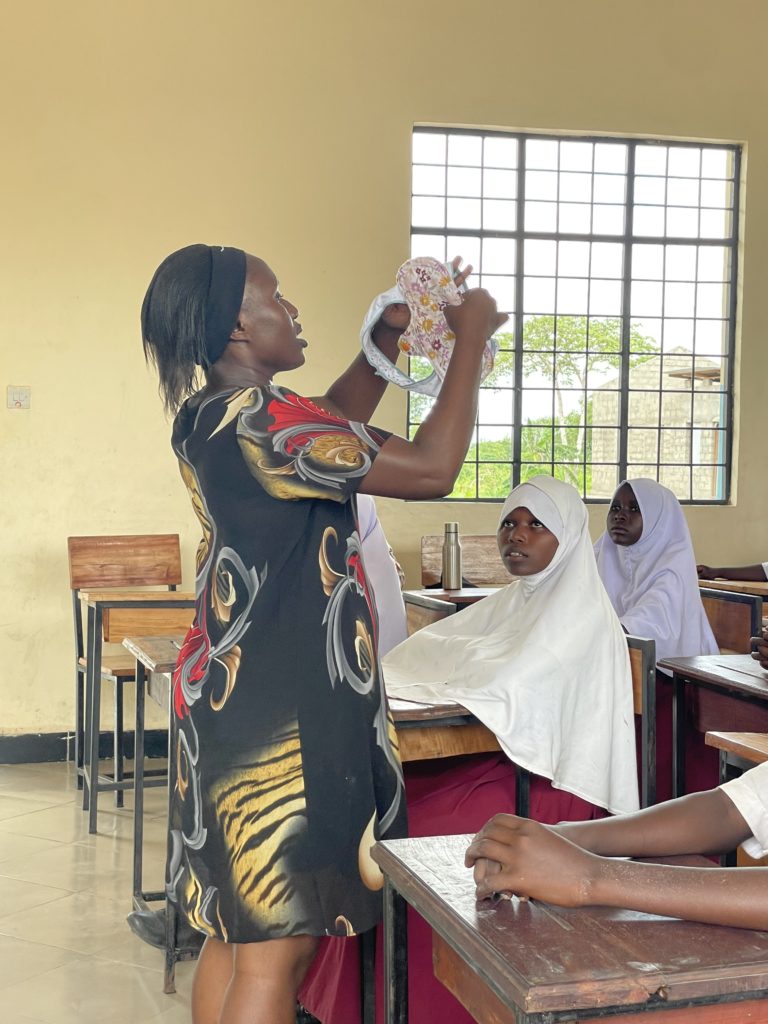
“One girl said, ‘thank you for the education,’” Monique shared. “That meant a lot, because it’s so much more than saying ‘thank you for the pads.’ Education is so much better and is what will have a lasting impact on these girls and their culture.”
These menstrual packages and training sessions are part of a trial project that will hopefully continue as long as there is funding and volunteer capacity to sew reusable pads. For now, we are thankful for the opportunity to have facilitated our first distribution and training with these teenage girls, and hope that it has gifted them with a measure of dignity and confidence for the future.
Source: https://www.worldbank.org/en/news/feature/2018/05/25/menstrual-hygiene-management
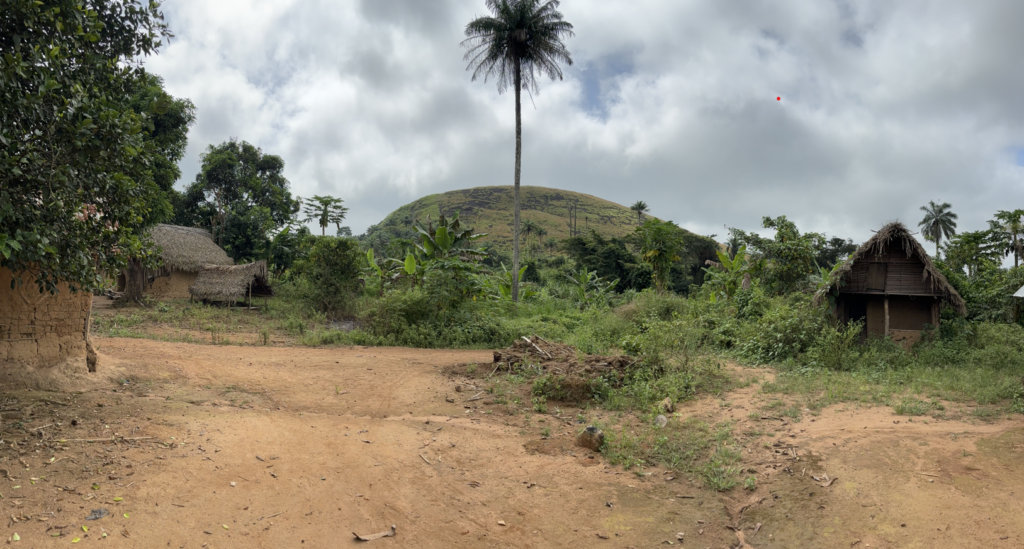
It has been a challenging yet highly fruitful season for our JESUS Film Church Planting Strategy (JFCPS) teams in Liberia and Sierra Leone as we continue to reach unreached people groups (UPGs). In the midst of political and religious tensions as well as the ongoing difficulty of travelling to these remote areas, our dedicated teams have managed to make significant strides in establishing relationships and sharing the gospel with these communities.
The Manya people of Liberia are a UPG that our teams have been diligently trying to reach, as they have a unique and complex set of struggles in society. Because of unresolved issues related to tribal violence that occurred 400 years ago, the Manya are shunned by other tribes in Liberia. Many converted to Islam, which offered them a sense of unity and belonging in the wake of their isolation from other people groups.
Therefore, the Manya tribe is now primarily associated with Islam. When a Manya person becomes a Christian, it is considered such an affront to their beliefs that they are forced to leave their village for fear of losing their lives. They must also change their name and self-isolate, making it very difficult for fellow Manya to find each other.
This past October, our teams visited the village of Nyanwendzu in northern Liberia. Previously, we had planted a church in this village and built a simple structure for them to gather inside. We have now also pledged to provide zinc sheeting so the church will be able to meet during the rainy season.
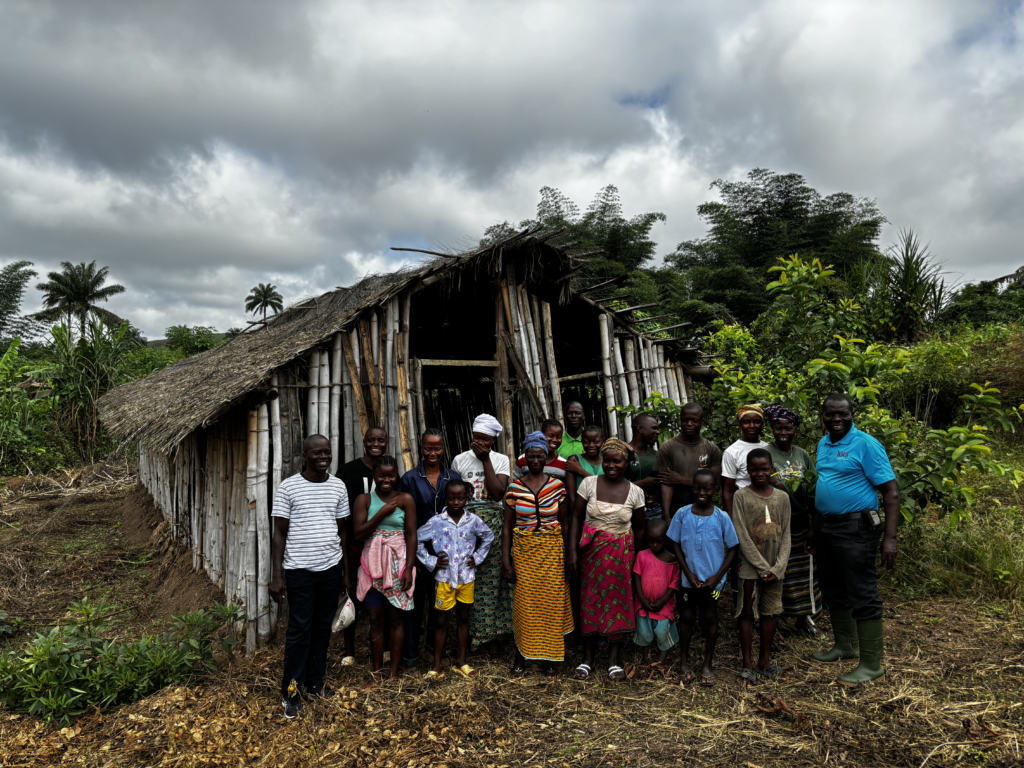
As we chatted with members of the Nyanwenduz village’s church, they openly shared about how the Lord has impacted them and their community. Of the 78 people who live in this small village, 35 of them attend the newly-planted church!
Although the village is primarily made up of the Loma tribe, the team asked if villagers were open to allowing members of other tribes to live in their community. Their immediate answer was a resounding “yes”. Villagers even expressed a willingness to allow Manya tribal members to live with them.
When we asked if they would consider planting a granddaughter church in a nearby Manya village, they immediately replied, “Yes! We don’t have any problem with that, as God’s grace is for everyone.”
The Nyanwenduz village’s attitude of grace and hospitality towards the Manya people is astounding and completely goes against the grain of tribal culture in Liberia. Their openness to people who are shunned by their own Musim-dominated villages makes this community a city on a hill, a safe haven for the outcasts and rejects of society. It is also a demonstration of the unconditional love of Christ, which overrides all religious tensions, cultural barriers and relational divides.
In Sierra Leone, we are encouraged by how our church planting program is equipping pastors with the tools and resources needed to establish new churches in the area. Pastor Francis, who works at Zion City Assembly church in Mattru Jong, spoke to us about how the JFCPS church planting training has had an incredible impact on his ministry.
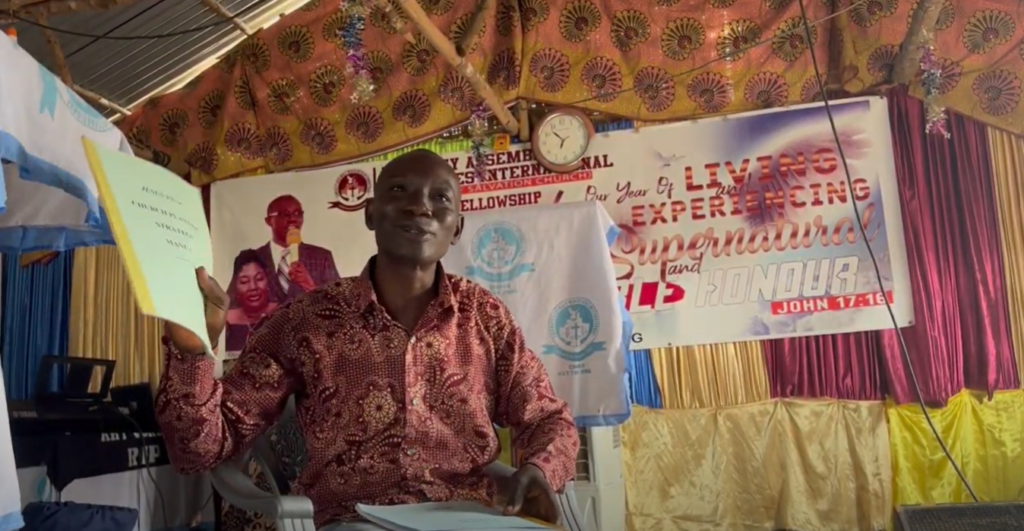
“They gave us training in [a] seminar. It was very good, after which we were encouraged that we needed to establish churches,” he shared.
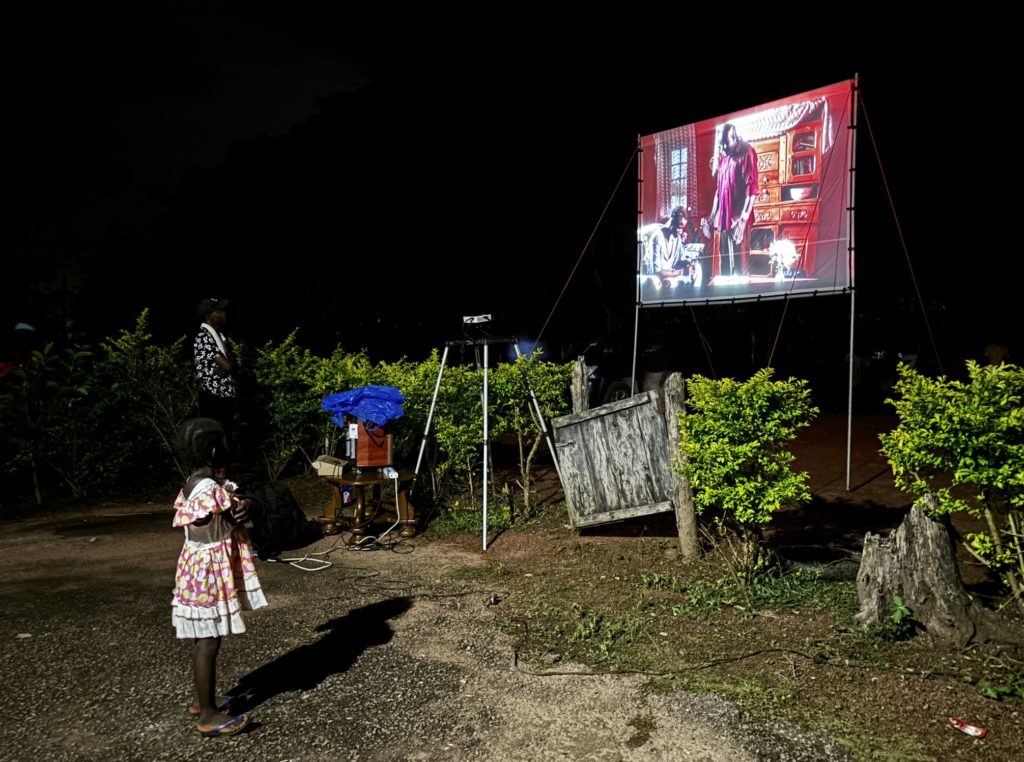
Pastor Francis explained that during the training, the JFCPS team showed them the JESUS Film and Walking With Jesus film series and encouraged them to use it as a tool for evangelism. He then went on to host his own showing and invited his village to come and hear the gospel message!
“We were able to bring this film sheet and people were there. The community came. They looked at the film. The film (Walking With Jesus, Africa) was educational and it captured a lot of Sierra Leonean context,” Pastor Francis said.
He explained that because the film was in the village’s cultural context, the message resonated with many people–even Muslims! Some Muslims ended up being converted to Christianity because they were so moved by Christ’s promise of forgiveness and the call to live as brothers and sisters.
In regards to the JFCPS training, Pastor Francis said, “These are life-living strategies. They gather all of us together . . . and we share information, we share ideas together as pastors. That helps equip us more.”
It is a delight to know that because of the JFCPS seminars and training materials, pastors are growing in the confidence and spiritual maturity needed to plant churches. Pastor Francis’s testimony highlights the importance of being continuously equipped and discipled as a leader, as well as the value of meeting together as a community of pastors to support and champion one another.
Our hearts are deeply encouraged by the impact that our ministry has had on communities in Liberia and Sierra Leone this past year. As of October 31, 2023, GAiN and JFCPS planted 164 churches across both countries. Additionally, they showed the JESUS Film to 100,436 people and witnessed 24,292 of these individuals receive Christ. Of the group who became Christians, 8,889 people chose to receive further discipleship in the basics of their faith.
Without the gracious hand of God upon the ministry of our local church partnerships, none of these beautiful stories of grace and growth would be possible. We give thanks for the ongoing work that He is doing in Liberia and Sierra Leone to transform broken communities into light-filled cities on a hill.

GAiN continues to see extraordinary transformation through the Water for Life Initiative in Benin, Togo and Tanzania. The successful provision of 3,105 wells across all three countries means that approximately 3,105,000 people are enjoying a healthier way of life!
David Lee, GAiN’s WFLI Environmental Programs and Data Specialist, travelled to Togo earlier this year to connect with some of the villages and facilitate training for the field staff. Thanks to a cancelled flight, he was able to visit an additional village called Agnidjé, located about one hour from the capital city of Lomé. It was there that he witnessed the vibrant hope and excitement of a community awaiting their first deep-capped water well.
“I saw the anticipation in the people’s eyes as the drilling rig hammered away bit by bit. They were really looking forward to the day that the well would be finished,” David recalled.
He shared that as he walked around the village, there were pits of varying sizes filled with bright green water. The pits were either hand dug wells that tapped into unclean surface-level groundwater or rainwater collection pits that gathered water saturated with soil and manure. This was the village’s sole source of water.
“We wouldn’t even want to touch that water, let alone use it,” David said.

Next to one of the water pits, David spoke to a middle-aged gentleman named Gilbert, who was happy to see the GAiN team visit and drill a well. Gilbert said that he had lived in the village for his entire life, over 40 years. He also shared that people in Agnidjé would use the unclean water from the pits in the village for irrigation and flushing. In order to drink, cook, clean, or wash, they would have to travel 5 km away to another village to buy clean water. Some people used a motorcycle, which cost money. Others, especially women and children, had to walk 10 km round trip every day carrying 50 litres of water on their shoulders or heads. Sometimes the water would spill, leaving less than half the amount when they returned.
The process of Agnidjé receiving a well all began when Gilbert talked with a pastor in the region, who was already familiar with GAiN. His church was the fruit of another church that GAiN had planted while providing a well from a different village. The pastor shared with Gilbert that GAiN provides wells for communities in need. Realizing that this well could change everything, Gilbert reached out to see if a team could come and help his village.

Gilbert explained that a few months ago, a team from GAiN did some assessments to determine if sub-surface, uncontaminated water was present in the village. When the team successfully found water deep in the ground, everyone in the village was filled with joy.
“I cannot describe in words how happy and how hopeful Gilbert and everyone in Agnidjé was watching that drilling rig pound inch by inch closer to clean water,” David shared. “After 40 years of living in Agnidjé, he witnessed flowing water spring up from the ground of his homeland for the first time.”
There are few experiences more profound than watching an entire community’s livelihood transform through the presence of clean running water. With every bucketful, physical bodies are restored, community relationships are strengthened and hope for the future is renewed. To establish both physically and relationally healthy communities in all three of our partner countries, GAiN has trained 251,664 individuals in proper hygiene and sanitation practices and engaged 69,727 people in discussion on gender roles and domestic abuse. Additionally, we have planted a total of 1,061 church plants and ensured that 42,921 people receive further discipleship in their faith.

“This is the most significant event to have happened in Agnidjé since Agnidjé existed,” Gilbert expressed. “This must go in the history books of our land that this day is the day we finally had water. The day we have hope, the day our lives are transformed, and the day we can hope for a better future. Praise be to God Almighty who provides, who listens to our prayers, and who sustains everything! We thank God for the blessing which is the ministry of GAiN.”
The overflowing joy and gratitude of people like Gilbert spur us on to continue doing the work we know that God has given us to do. Slowly but surely, the beauty of clean water and the restorative message of Jesus’ love are altering the course of these countries forever.
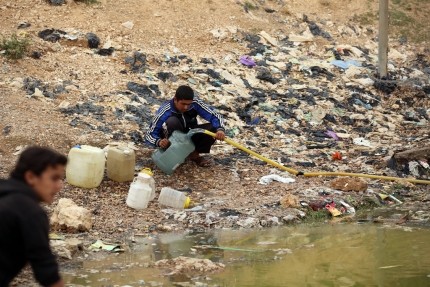
30 October 2017 – The Islamic State of Iraq and the Levant (ISIL or D’aesh) may be largely pushed out of Syria’s Raqqa governorate, but after years of oppression and nearly a year of intense fighting – marked recently by heavy airstrikes – humanitarian needs will continue to be large for some time, the top United Nations relief official told the Security Council Monday.
“Since the beginning of the anti-ISIL offensive in November last year, airstrikes and clashes have resulted in more than 436,000 people being displaced from Raqqa to 60 different locations, including in neighbouring governorates,” UN Emergency Relief Coordinator said briefing the Council via videoconference from Amman, Jordan.
“One conclusion is obvious: the impact of the Syria crisis continues to be profound.”
Expressing deep worry about the impact of fighting and airstrikes on civilians and civilian infrastructure in Raqqa governorate, with scores of civilians reportedly killed in recent months, he said he is also concerned for the safety and protection of civilians at risk from unexploded ordinance throughout Raqqa city, particularly those trying to return to their homes.
“Despite the directive issued by local authorities for civilians not to return to the city until it is deemed safe, the UN anticipates that people will go back to try to check on and protect their homes and their personal assets,” Mr. Lowcock explained.
Further to the east, in Deir Ez-Zor governorate, heavy fighting and airstrikes continue to result in civilian deaths and injuries. Large-scale displacement also continues, with the UN International Organization for Migration (IOM) reporting some 350,000 people displaced since August, including more than 250,000 people in October alone.
As for eastern Ghouta, Mr. Lowcock daily shelling has continued to be reported in recent weeks. Humanitarian access to eastern Ghouta – one of the four de-escalated areas where nearly 95 per cent of Syria’s besieged population lives – has been severely curtailed for months. Since the start of the year 110,000 people have received food assistance, out of an estimated population of nearly 400,000.
“Today the UN and partners delivered food, nutrition and health assistance to 40,000 people, he told the Council, warning however that an alarming number of child malnutrition cases have been recorded there, and more than 400 people with health problems require medical evacuation.
Overall, he said that more than 13 million people inside Syria still need humanitarian assistance. 6.3 million of them are exceptionally vulnerable and in acute need because of displacement, hostilities, and limited access to basic goods and services. “Conflict and violations of international humanitarian law continue to be the principal drivers of humanitarian need, with civilians in many parts of the country enduring massive suffering.”
“Against this background, the UN and our partners continue to implement in Syria one of the largest humanitarian operations in the world,” said Mr. Lowcock who is the UN Under-Secretary-General for Coordination of Humanitarian Affairs, noting, by example that in September, the World Food Programme (WFP) provided food assistance to more than 3.3 million people, the UN Children’s Fund (UNICEF) reached over 1.5 million people, and the World health Organization (WHO) reached over 800,000 people.
He also went on to point out that cross-border assistance provided for in last year’s Council resolution 2165 “has been a lifeline,” allowing the UN to reach millions of people in need in northern and southern parts of Syria. On average, aid was delivered to 2.76 million people a month through cross-border operations between January and August of this year.
“Our experience with cross-line operations from within Syria […] leads us to believe that it would be impossible to reach those people in a sustained manner from within Syria. I therefore regard a renewal of resolution 2165 as essential. Millions of people depend on the activities it mandates,” he underscored.
IF YOU WOULD LIKE TO KNOW HOW GAIN IS INVOLVED, CLICK HERE.
(Source)
(Image Source: UNICEF/UN066040/Souleiman)