
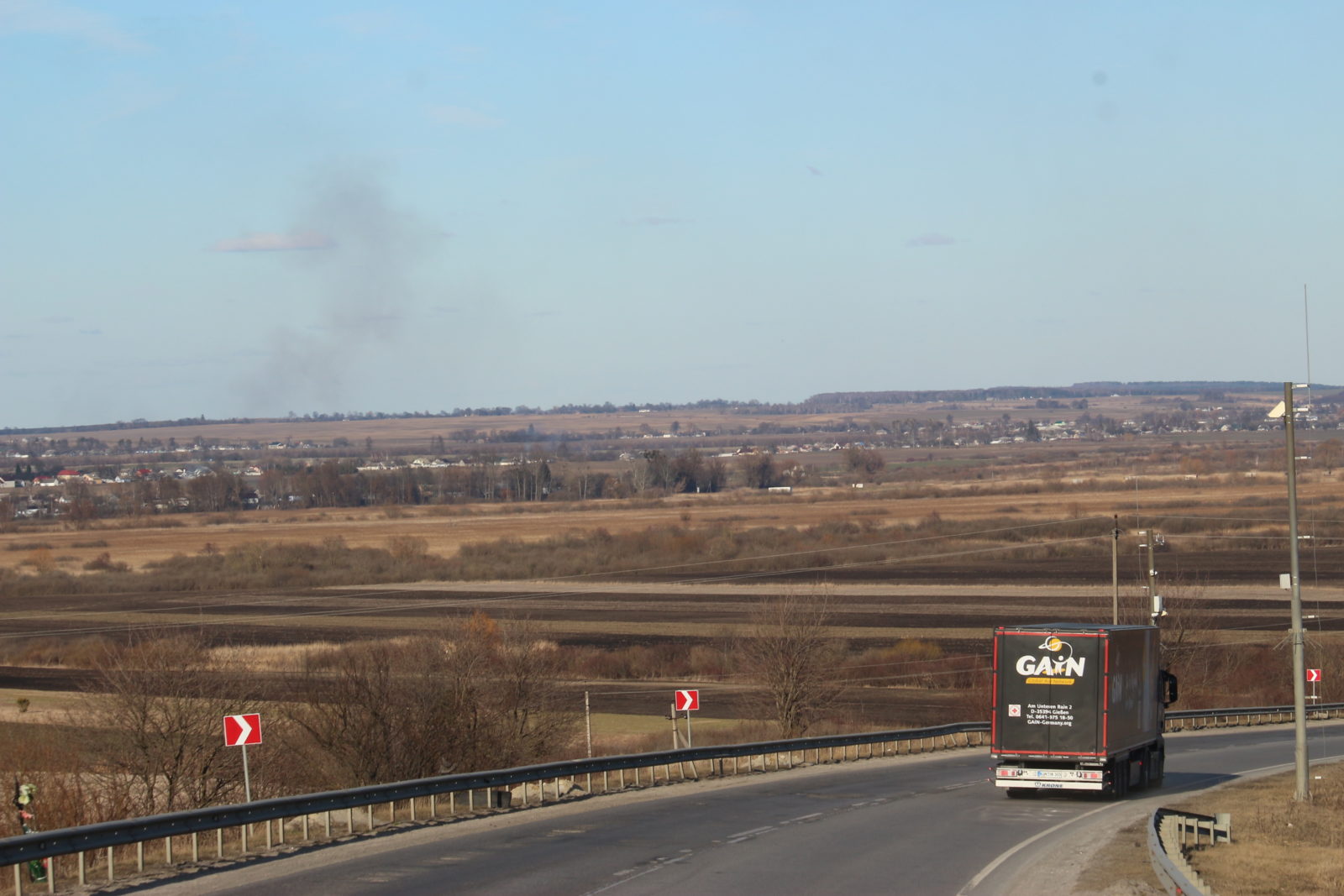


Ever since the start of the war in Ukraine, there has been an increase in domestic abuse and violence against women, brought about by both significant others and Russian soldiers during the occupation. Since many victims do not have relatives or friends with whom they stay with, they and their children are often left traumatized and desperately in need of care.
In the Kyiv region of Ukraine, there are currently five shelters set up to house women who have suffered from assault. Here, they can live for free and take time to recover and rest for one to three months with their kids. The shelters aren’t marked on maps but are secretly disclosed at church by pastors to women in need. The location is classified in order to ensure their safety.
The ultimate purpose of these shelters is to bring emotional, psychological and spiritual healing to women and children and to help them start a new life. They can accommodate up to 15 people and provide women with free access to teachers and psychologists as well as help in finding jobs. Lawyers are also available if they need helping filing a lawsuit or filing for divorce or alimony payments for children.The women do their own household chores, cooking, cleaning and washing.
Since the structures aren’t funded by the government, our local partners decided to take on the responsibility of upgrading some of these shelters in order to better serve women who have experienced abuse and hardship.
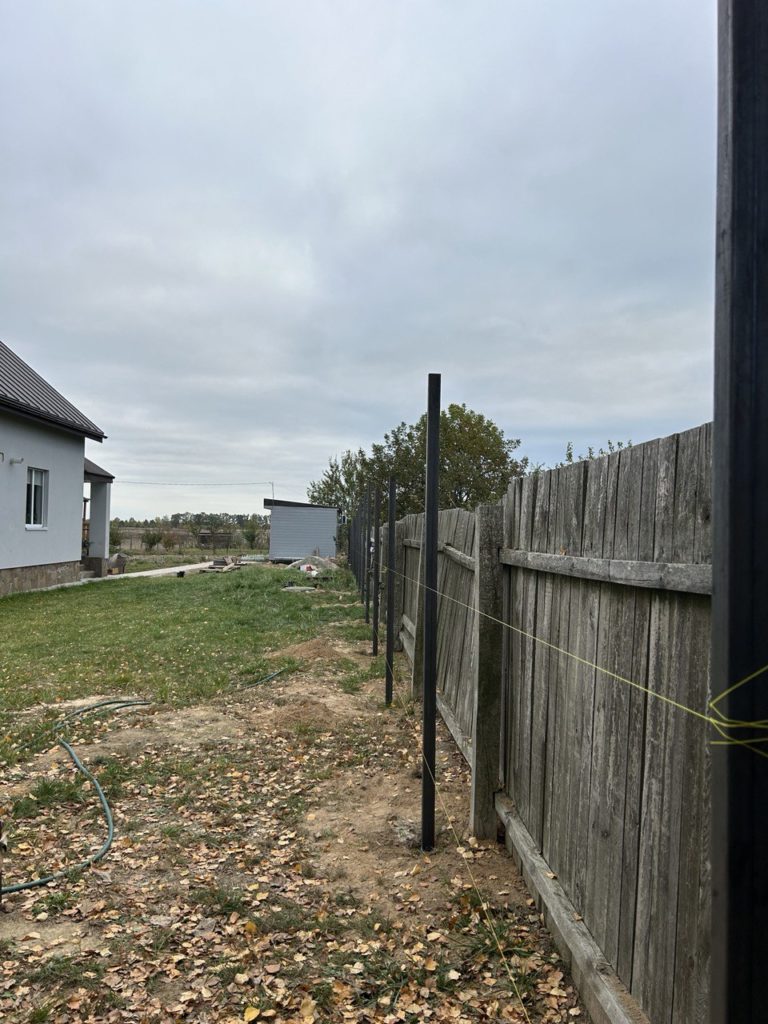


Alongside our local partner, GAiN helped fund a playground for the children, a new fence to ensure the safety of the women living in the shelter and a gazebo for conversations held outside in the fresh air. Since the shelters have limited rooms, the gazebo serves as an alternative space for important conversations or meetings with a psychologist.
It is our hope that these shelters and their new structures provide not just a safe haven, but also a crucial support system for women and children in need of healing after enduring violence and trauma. Our team at GAiN remains committed to empowering and restoring hope to those affected by the horrors of war.

Since February 2023, we have been helping those affected by the disastrous earthquake in Morocco.
Rather than spreading ourselves thin and delivering a small amount of aid to many people, we have focused on several small villages that are tucked away in the High Atlas Mountains. These villages are located in cooler elevations so we have prioritized the provision of shelter and warmth, distributing tents, blankets, latrines and emergency and transitional shelters.
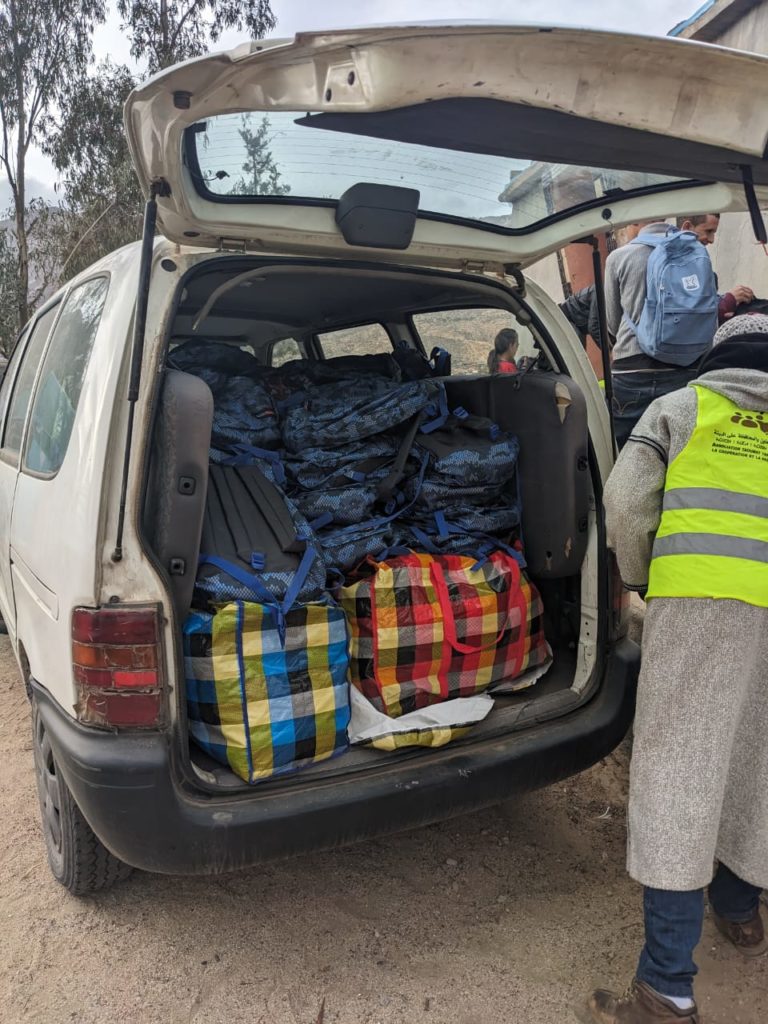
Most recently, we provided 200 backpacks to children affected in these villages.
Each of the packs were filled with the primary school supplies such as notebooks, pencils, colored pencils, and scissors. The kids were overjoyed to receive their backpacks! Our hope is that these items will help bring a sense of normality to their lives and inspire hope and creativity during a difficult time.

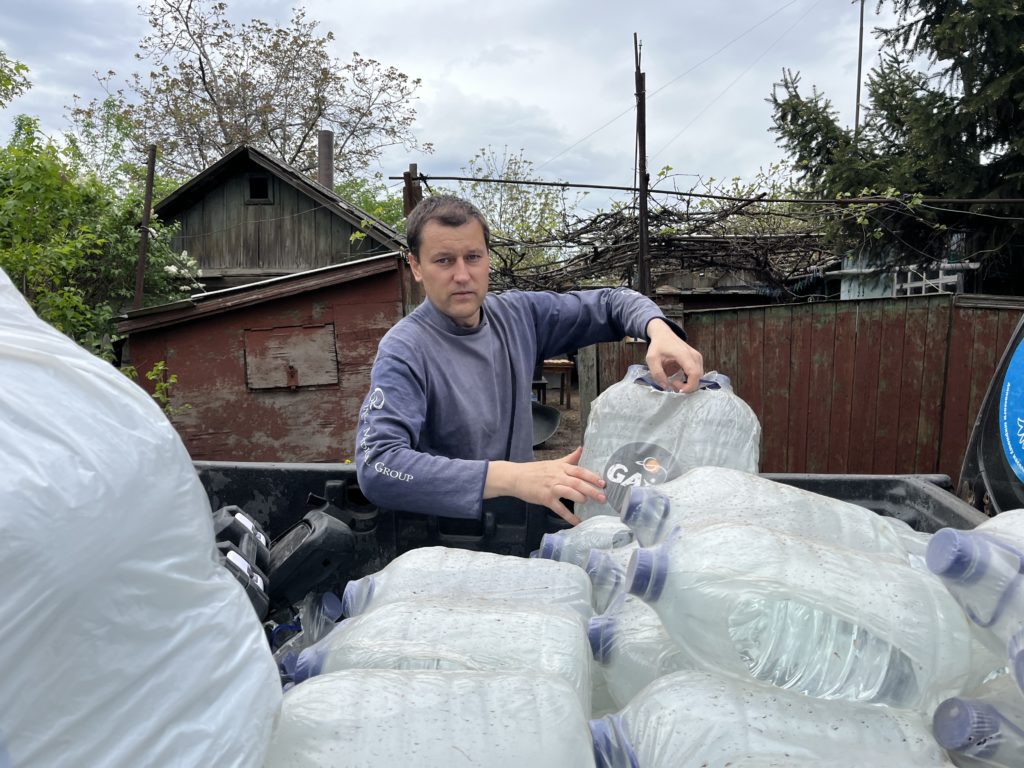
Meet Sergei Buchin! He is the parishioner of a Baptist church and lives with his wife Nadezhda in the remote village of Chasiv Yar, Ukraine. When the war began, Sergei and his wife made a decision, at the risk of their lives, to stay in Chasiv Yar to help others.
Most of the people that live around Sergei and his family are elderly women over 70 years of age. Life in the midst of war-torn Ukraine is incredibly difficult for them, and so Sergei and Nadezhda assist them as much as they can. They deliver water and food to the old women and help to close broken windows and repair their roofs after shelling.
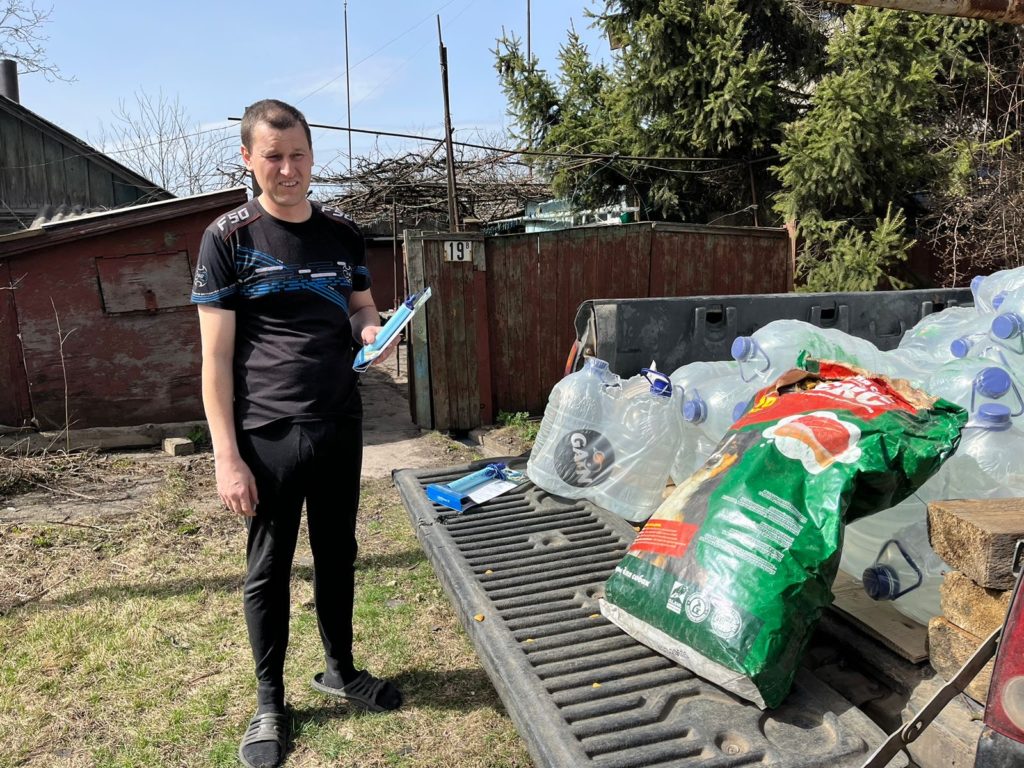
On Sunday, Christians in the community gather at Sergei’s house to pray, socialize and sing psalms, as all the churches were destroyed. Sergei continues to work at his job in the utility company where they unload humanitarian aid, dig graves, bury the dead, watch over power generators, clear the rubble after shelling and repair the rooms where water tanks are located amongst other tasks.
Since Sergei spends a lot of time working and helping other people, he has no time to stand in line to get water. Thankfully, Evgeny, one of our local partners, was able to bring water directly to his house for his family and the elderly neighbours whom he shares his water supply with.
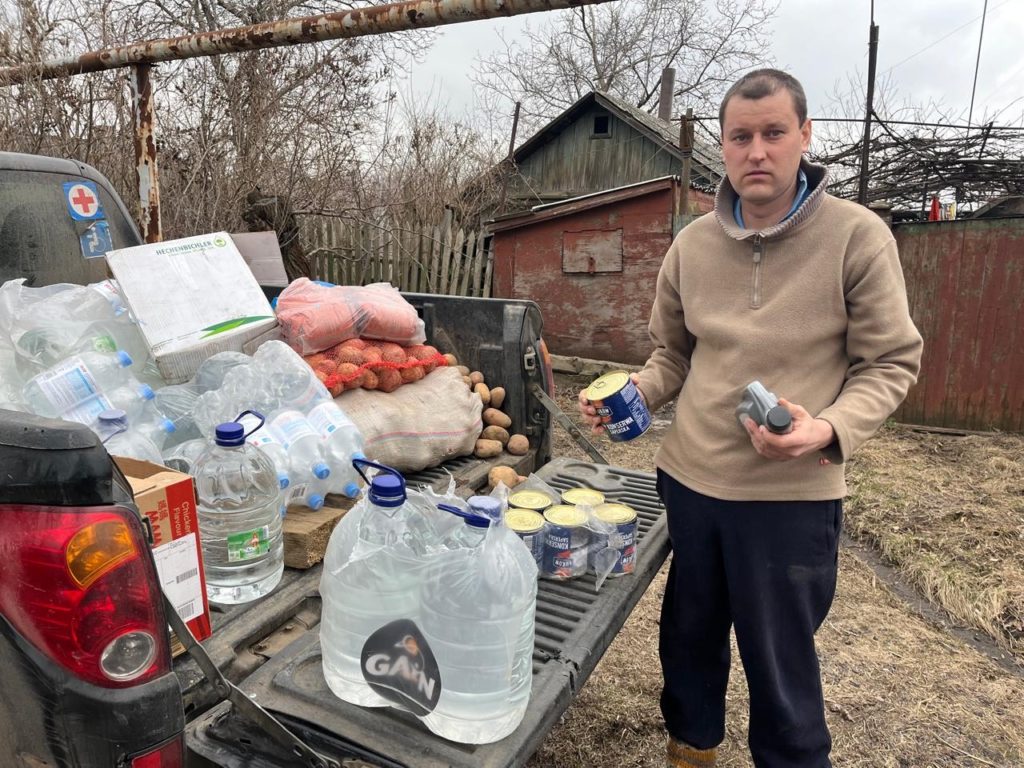
Unfortunately, it is becoming more and more dangerous for Evgeny to drive to Sergei’s place. He reported that during his last visit, an enemy drone flew at him. Thankfully, there was a strong wind and the drone could not aim and flew away.
It is easy to forget that millions of people in Ukraine are facing this sort of reality, where churches are destroyed, water is a scarce resource and enemy drones lurk around the corner. Yet people like Sergei, Nadezhda and Evgeny represent what a loving and generous community can look like in hard times. We are moved by their selfless decision to remain in Chasiv Yar and serve their neighbours, even at a cost to themselves.
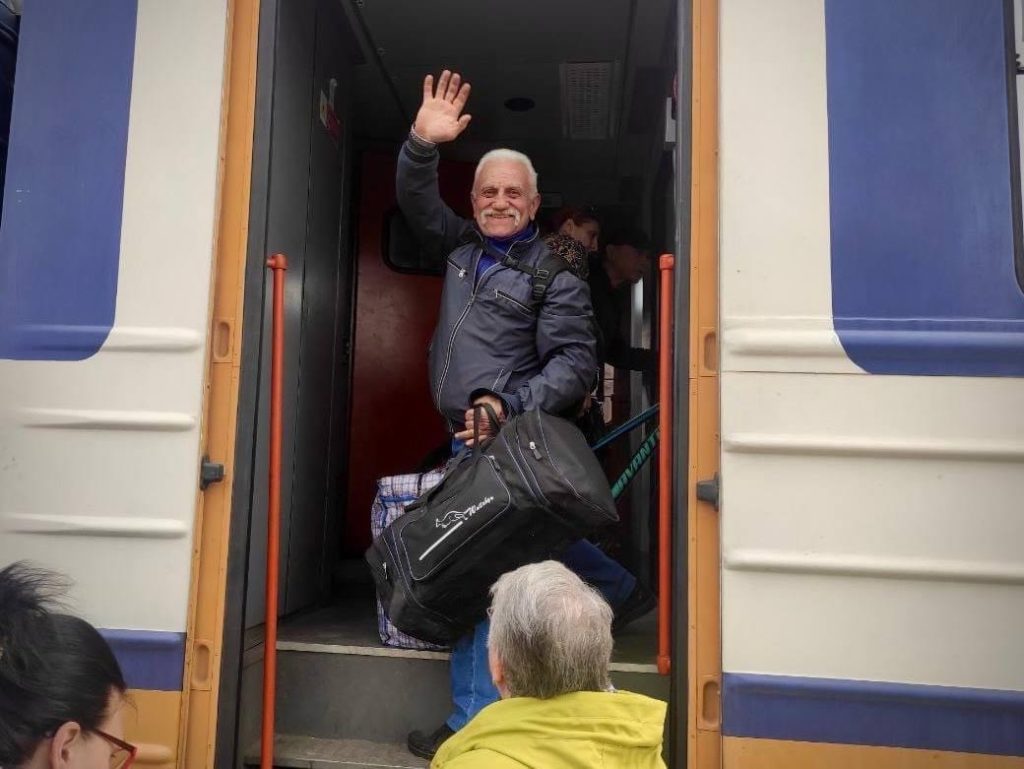
Olexandr Petrovich Bunin is 68 years old and lives in the city of Chasiv Yar, Ukraine. Before he retired, he worked at the local factory as an engineer.
When the Russian invasion began and most of the men left town, Olexandr went to work for the utility company again. Because of his organizational skills and experience working with people, he was appointed as head of the “Point of Indestructibility.” This is a place where the residents of the town can receive humanitarian aid, charge their phones, warm up during winter, eat free food and use the Internet to contact their relatives.
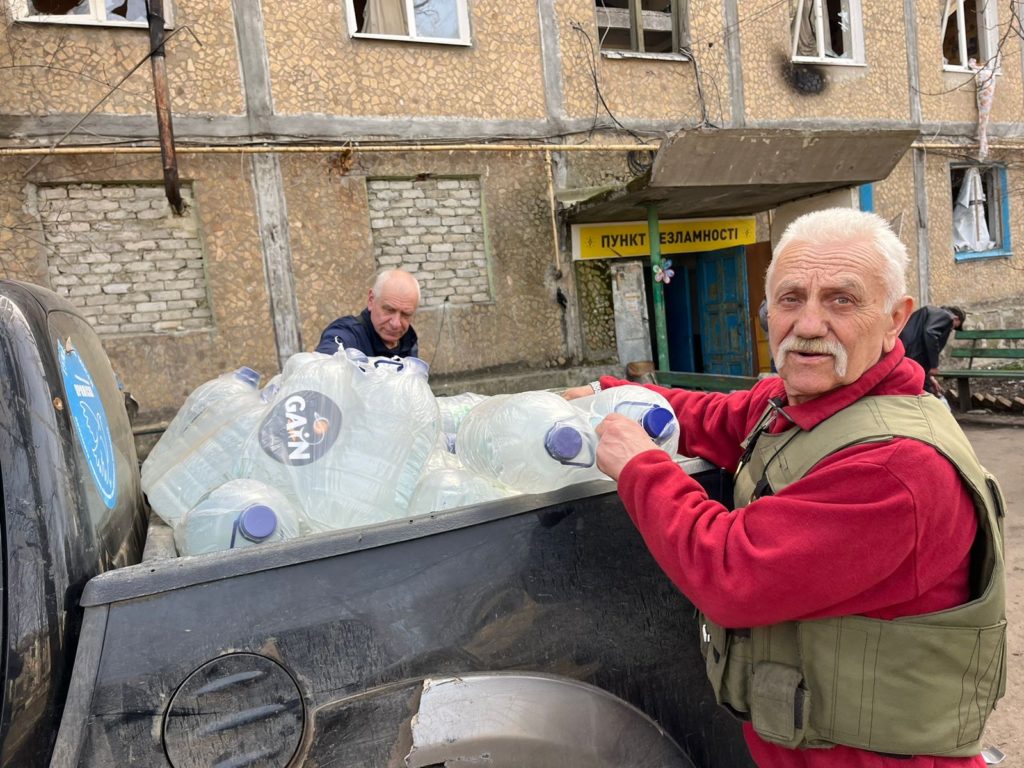
The point was shelled several times, but Olexandr continued to work and organize the distribution of water and food. He kept a small supply of bottled water for emergencies and taught the locals how to use the water filters from GAiN. His wife, Svetlana, stood in the place of medical workers and even learned how to give blood pressure shots to old people.
The couple has children and grandchildren abroad, but chose to stay in the city to help. Only until very recently did they decide to leave the city and visit them.
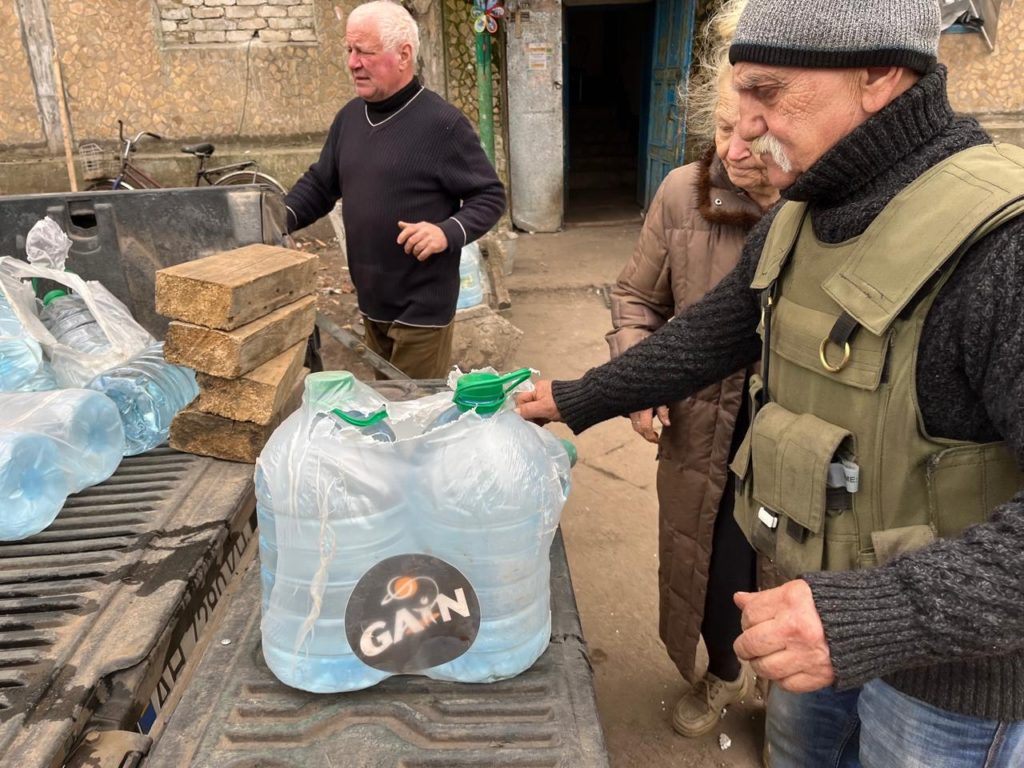
Olexandr and Svetlana have modelled sacrificial, servant hearted love. Despite separation from their loved ones, they made the hard decision to stay where they were to help their neighbours. We are so grateful that they could distribute some of the aid provided by GAiN. Their humble service has not only blessed many with the basics to survive, but has helped keep families connected to each other during an incredibly difficult and isolating time.
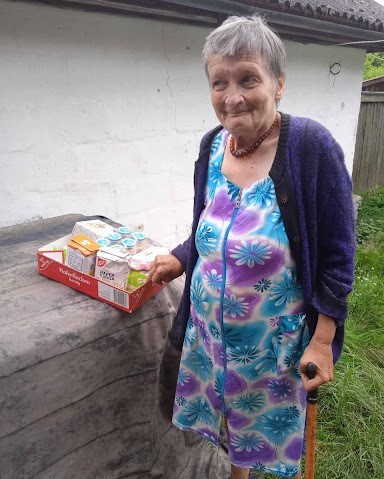
Maria Osipchuk is a 79-year-old resident of the village of Borzoa in the Chemihiv region. She spent her entire working life as a teacher at the local elementary school, but is now retired. Even though she poured her entire life into helping and guiding other people’s children, she has no family of her own. In her old age, she feels the sharp absence of family relationships even more prominently.
The war added another layer of hardship onto her. When the conflict began and rockets were frequently being fired, Maria lived in the cellar for almost a month. While sitting there alone, she prayed constantly.
“I asked God to save [my] house and the houses of [my] neighbors,” she shared.
To her delight, God answered her prayer. Her entire street remained unscathed, but on the next street, only 200 meters away, three houses were demolished by one rocket. Maria understands that it was God who helped her. And now she continues to be provided for through the volunteers who periodically bring practical supplies and spiritual help to her small village.
The old lady received food from GAiN and a word of hope from the volunteers. She even joked that God knows she had no teeth and gave her baby puree with meat so she didn’t have to chew.
Maria was inspired by the help she received and felt strengthened in her spirit. We are so thankful for the opportunity we had to hear her story and encourage her that even without a family to call her own, she is not alone.
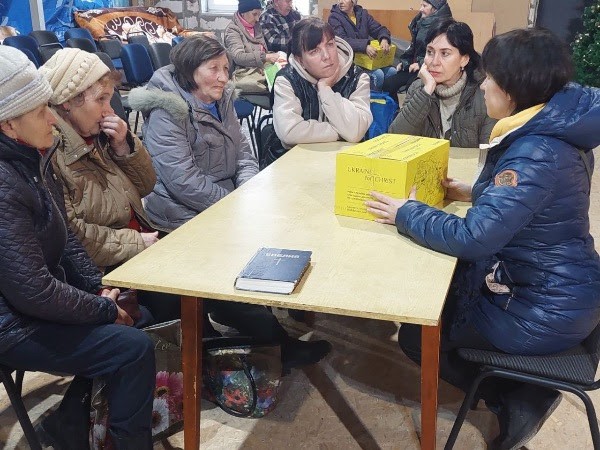
Through our local partner on the ground, GAiN is providing yellow boxes for displaced people in Ukraine. A single yellow box provides a week’s worth of food for a family, and one box is delivered each week until the family has received four yellow boxes. Our local partner also takes time during each weekly delivery to explain an aspect of the gospel message. They share about hope and God’s love for us personally.
During a recent trip to Kherson, two members of our partner organization, Sasha and Tanya, shared about their experience delivering yellow boxes to communities in need and hearing the stories of war survivors:
“We are driving along the streets and see many houses in the center with windows boarded up with plywood. It looks sad. I remember Irpin, Kyiv, and realize that they are being rebuilt much faster than here. We arrived at the church. We meet the ministers [and] share information [such as] how many people have left, how many new people have come [and] whether there are enough ministers left.
We are greeted by a very hospitable pastor [named] Yuriy. His sense of humor and simplicity help us to feel comfortable quickly. We hear the first stories about the life of the church. A woman tells us about the death of her neighbor who did not make it 20 meters to the house. The pastor recalls the first year. There was a lot of shelling because the airport was nearby. People from the neighboring streets started coming to church on Sundays. During the explosions they continue to have worship services. No one wanted to go home afterwards. They would just turn on the Christian music and people would talk for hours. In this way new people appeared, some of whom were baptized and now go to church regularly. Most of them are older people, families with children left after the intense shelling.
[A woman named] Halyna has a son and husband who both died of cancer and now her second son is ill. She said: “If my son dies, I will be left alone, I have no one else.” It is not only the war that causes suffering which makes [people] afraid and lonely.
[Another woman named] Svitlana said that thanks to the war, she came to church. Svitlana’s face shines because she now feels a great need to know God more. She says that she is sorry when the service ends. She said, “I understand, it’s just that I lived without God for 50 years, and now I can’t get enough.”
[We also met] Natasha, [whose] brother serves in the Armed Forces of Ukraine [and] was surrounded by the enemy. [He got] a concussion but is alive and continues to serve. In the first year, her nephew was killed during the shelling in Mykolaiv when he was standing at a bus stop. That’s [an example of] how the war comes unexpectedly, [killing people and leaving their family members] alive in the middle of hell. [Natasha’s] only daughter recently decided to join the Armed Forces. [When I asked why], she said, “because she believes that now everyone should be able to defend themselves and the country.”
Sasha and Tanya’s encounters with people in Ukraine are a reminder of the horrors and trauma that families are experiencing each day. In the face of these losses, we are so thankful for how people are finding community, support and hope in the Lord.
Morocco is still reeling from the devastating 6.8 magnitude earthquake that struck the western side of the country this past September. Not only were 2,900 people killed and another 5,500 injured, but many remote villages in the Atlas Mountains as well as historic parts of the city of Marrakech were completely obliterated. After conducting an assessment on the ground, GAiN concluded that the need for shelter and blankets was of utmost importance and has since delivered aid to many people affected by the disaster.
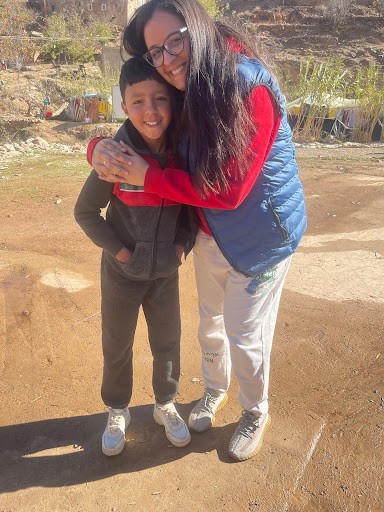
Our teams have travelled and distributed aid in various parts of western Morocco and continue to encounter all sorts of people who are eager to share their stories. In one village south of Marrakesh, team members gave a relief package to a 12-year-old boy named Idir, whose life was turned upside down by the violent upheaval of the earthquake. He told the team about how he lost everything he owned and everyone he loved, including both of his parents and his brothers. Today, he lives in a tent with four women who each lost their husbands.
“I continue to speak with my father even though he is no longer around because I miss him so much,” Idir shared.
Despite the crushing loss of his family and home, Idir continues to have hope for the future. He dreams of studying and participating in sports and hopes that one day, he will be a worldwide journalist so that everybody will know what he and his country have lived through.
Idir is one of many people in Morocco who have received some form of aid from GAiN. According to recent stats and in collaboration with our partner on the ground, we have provided 400 packages of essential items such as food and clothing, 20 large tents, 65 emergency tarps and 20 latrines to survivors of the earthquake.
Although our efforts feel small in the wake of such overwhelming loss and hardship, we pray that by meeting some of the immediate needs of the people of Morocco, they will gain a measure of hope and strength for the days to come. Our desire is to one day look back and see Morocco as a country that overcame the darkest of days and is now marked by peace, stability and restoration.

Ever since the enormous earthquake in February of this year, Turkey and Syria have been struggling to move forward. The degree of devastation is intense and has pushed tens of thousands of people into an ongoing state of desperation and need.
We have continued our work with our partner on the ground in order to provide aid for those without proper living conditions. According to recent reports, there were over one million individuals living in tents in the Hatay area a few months ago. Only an estimated 85,000 of these people have been moved to container houses, which are nothing more than empty, portable containers set up as temporary forms of shelter. These structures lack a bathroom or kitchen and have hardly any electricity, which was extremely trying in the summer months as temperatures were reaching highs of 35 degrees. Some individuals were able to scrape together enough money to buy a mattress or sofa, or had one donated to them by an NGO, but the numbers are few.
One of our partners relayed a story of a family living in one of these container houses:
“Last week, contacts in Istanbul informed us of a family living in Hatay who were in need of help, so some members of our team visited them. It was a family with small babies. Their house had collapsed. All their neighbours had been killed by the earthquake. All except them. They now live with two other families in a single container house. Three families crammed into one container. They have nothing, they have lost everything. One of the big needs we identified was an air conditioner, a fridge and a washing machine”.

In an effort to alleviate some of people’s discomfort, GAiN and our partner organization sought to provide fans and refrigerators to people living in these container houses. Within days, our teams were able to identify several dozen families living in these difficult conditions and in need of aid.
During one distribution, our partners on the ground, accompanied by a governor of the city, encountered an elderly couple in their sixties in the village of Hatay. It was a blisteringly hot 44º day and as the team handed them the fridge, the couple graciously offered the team members a seat and some bottled water.
The elderly man pointed to a pile of rubble, the remains of their house where a lifetime of memories and experiences are now buried. In spite of everything, they were happy and grateful for the house they have now, which they have been gradually building with their own hands after the earthquake.
Our partner said, “The heat was extreme and this is a big problem for families like the one we have visited. Not only is it very difficult to withstand the temperatures in a home that is not conditioned for it, but the food does not last long before rotting.”
Giving the elderly couple a refrigerator has not only boosted their spirits, but it has improved their health by allowing them to keep food without fearing it will spoil and make them sick.

“Meeting this couple makes us think about how interesting it is to see the different responses to the tragedy that each family has: some turn to help others, others focus on improving their situation, and others remain paralyzed without knowing what to do,” our partner shared.
A fridge may not seem like much, but to these survivors, it has symbolized love and reminded them that there are people out there who care for their wellbeing. To date, our partners on the ground have distributed 75 fans and 75 refrigerators, as well as 8,600 litres of bottled water, 860 food boxes and 1,506 health care kits. They have also built 20 tiny houses for people without homes and have distributed two large transports of GIK, including essentials such as toilet paper, clothes, blankets and mattresses.
The disaster relief we have brought to Turkey and Syria can feel like a small droplet of help in a sea of devastation and need. Yet knowing the hope that can seep out of our lives into those we touch spurs us to keep going. In Jeremiah 29:11, God declares, “‘For I know the plans I have for you’ declares the Lord. ‘Plans to prosper you and not to harm you, plans to give you a hope and a future.’”
We speak this promise over the nations of Turkey and Syria, for He who promised is faithful.
For over a year and a half, GAiN has committed to bringing aid and support to the people of Ukraine as they continue to navigate the war. Current stats report that there are 5.8 million Ukrainian refugees recorded across Europe and 3.6 million internally displaced people (IDPs) in Ukraine. Simply put, there are still millions of people in dire need of practical provision, such as food and shelter, especially with winter on the way.
Our local partners on the ground recently encountered two women, Raisa and Violette, who have both been profoundly impacted by GAiN’s work. Although the women live over 600 km apart and do not know each other, both share similar stories of finding hope in a time of overwhelming loss and hardship.
Raisa Kelb is a 39-year-old woman who lives with her husband and children in Kherson. Despite the danger of staying there during the period of occupation by Russian troops, her family remained because both she and her husband are in charge of caring for their elderly parents. Raisa works as a hairdresser while her husband works in the municipal service of the city.

Due to the massive explosion of the Kakhovka reservoir, Raisa’s house completely flooded and became unusable, causing city authorities to resettle their family in a hostel. The four of them huddle in the same room and share a kitchen with 16 other families. Life is not easy, wages have fallen and the chances of saving enough money to repair their house or buy a new home are slim. But Raisa has not lost hope for a better life–she is inspired by the fact that people from all over the world are helping the people of Kherson. Since receiving aid from GAiN, she now has the resources to feed her family for some time.
“This is evidence of God’s love and care in [our] lives,” Raisa said. “[I am] very grateful to everyone who is involved in this good deed.”
Violetta Chizhevskaya (30 years old) lives in Kharkov and raises her children, Ilya (5 years old) and Dasha (4 years old) by herself. Like many residents of Kharkov, the family was left homeless and forced to rent an apartment. Violetta is a practical psychologist, but since the beginning of the war, her client demand has significantly decreased. Earnings are hardly enough for utilities and rent.

Therefore, when help came from GAiN, Violetta was exceedingly thankful. She was already thinking about buying shoes for her children, so it was perfect timing when GAiN arrived with brand new sneakers for her kids. Additionally, the family received a food package. The children were especially pleased with the sweets!
Violetta shared, “This help [has] not only met [my] material needs but [has] also strengthened [my] faith in human kindness and God’s love.”
Raisa and Violette are two women of incredible strength and grit, supporting the needs of their families in a time when their own lives are at risk. Losing their homes and barely scraping together enough funds to make ends meet is difficult and taxing, which is why it gives GAiN such great joy to be able to bless their families with practical aid. Their stories remind us that while many people are surviving each day, the need for basic necessities, like food, shelter and adequate clothing, is still prevalent. As an organization, we are devoted to seeing health and vitality permeate Ukraine once again and look ahead to many more months of bringing humanitarian aid and the love of Christ to those we encounter on the ground.
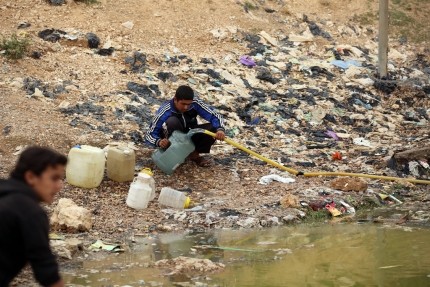
30 October 2017 – The Islamic State of Iraq and the Levant (ISIL or D’aesh) may be largely pushed out of Syria’s Raqqa governorate, but after years of oppression and nearly a year of intense fighting – marked recently by heavy airstrikes – humanitarian needs will continue to be large for some time, the top United Nations relief official told the Security Council Monday.
“Since the beginning of the anti-ISIL offensive in November last year, airstrikes and clashes have resulted in more than 436,000 people being displaced from Raqqa to 60 different locations, including in neighbouring governorates,” UN Emergency Relief Coordinator said briefing the Council via videoconference from Amman, Jordan.
“One conclusion is obvious: the impact of the Syria crisis continues to be profound.”
Expressing deep worry about the impact of fighting and airstrikes on civilians and civilian infrastructure in Raqqa governorate, with scores of civilians reportedly killed in recent months, he said he is also concerned for the safety and protection of civilians at risk from unexploded ordinance throughout Raqqa city, particularly those trying to return to their homes.
“Despite the directive issued by local authorities for civilians not to return to the city until it is deemed safe, the UN anticipates that people will go back to try to check on and protect their homes and their personal assets,” Mr. Lowcock explained.
Further to the east, in Deir Ez-Zor governorate, heavy fighting and airstrikes continue to result in civilian deaths and injuries. Large-scale displacement also continues, with the UN International Organization for Migration (IOM) reporting some 350,000 people displaced since August, including more than 250,000 people in October alone.
As for eastern Ghouta, Mr. Lowcock daily shelling has continued to be reported in recent weeks. Humanitarian access to eastern Ghouta – one of the four de-escalated areas where nearly 95 per cent of Syria’s besieged population lives – has been severely curtailed for months. Since the start of the year 110,000 people have received food assistance, out of an estimated population of nearly 400,000.
“Today the UN and partners delivered food, nutrition and health assistance to 40,000 people, he told the Council, warning however that an alarming number of child malnutrition cases have been recorded there, and more than 400 people with health problems require medical evacuation.
Overall, he said that more than 13 million people inside Syria still need humanitarian assistance. 6.3 million of them are exceptionally vulnerable and in acute need because of displacement, hostilities, and limited access to basic goods and services. “Conflict and violations of international humanitarian law continue to be the principal drivers of humanitarian need, with civilians in many parts of the country enduring massive suffering.”
“Against this background, the UN and our partners continue to implement in Syria one of the largest humanitarian operations in the world,” said Mr. Lowcock who is the UN Under-Secretary-General for Coordination of Humanitarian Affairs, noting, by example that in September, the World Food Programme (WFP) provided food assistance to more than 3.3 million people, the UN Children’s Fund (UNICEF) reached over 1.5 million people, and the World health Organization (WHO) reached over 800,000 people.
He also went on to point out that cross-border assistance provided for in last year’s Council resolution 2165 “has been a lifeline,” allowing the UN to reach millions of people in need in northern and southern parts of Syria. On average, aid was delivered to 2.76 million people a month through cross-border operations between January and August of this year.
“Our experience with cross-line operations from within Syria […] leads us to believe that it would be impossible to reach those people in a sustained manner from within Syria. I therefore regard a renewal of resolution 2165 as essential. Millions of people depend on the activities it mandates,” he underscored.
IF YOU WOULD LIKE TO KNOW HOW GAIN IS INVOLVED, CLICK HERE.
(Source)
(Image Source: UNICEF/UN066040/Souleiman)